

Audiometry Test: $54.50 NETT. Same-Day Appointment (2025)
Our WhatsApp line +6588838128 is temporarily unavailable. Please reach us at +6588838892 instead.

Audiometry Test

Medically Reviewed By: Dr. Jana Lim
Last updated: Dec 08, 2025
Test Name Audiometry Test (Pure-Tone Audiometry – Air Conduction)
Purpose Assesses hearing ability by measuring how well sounds at different volumes and pitches are detected, helping identify hearing loss and determine hearing thresholds.
Suitable For Suitable for individuals with hearing changes, age-related concerns, ear-related symptoms, prolonged noise exposure, or workplace requirements for routine hearing checks.
Price $54.50 NETT and inclusive of GST
Appointment Options Same-day appointment (subject to availability).
Book via WhatsApp: 8883 8892 or email: hi@atamed.sg
Clinic Locations Jurong: 21 Jurong Gateway Rd, #02-08 CPF Jurong Building, S608546

What Is an Audiometry Test?

An audiometry test is a hearing assessment that measures how well you detect sounds at different volumes and pitches. It evaluates hearing thresholds (the quietest sounds you can hear), identifies possible hearing loss, and indicates whether further testing or treatment may be required.

An audiometry test is often considered when there are hearing changes that may be linked to ageing, prolonged noise exposure, or underlying ear conditions.

During the test, you respond to tones or speech delivered through specialised equipment such as an audiometer and calibrated headphones, indicating whenever you hear a sound so your hearing levels can be measured accurately across different pitches and volumes.

Types of Hearing Loss

Hearing loss is categorised based on which part of the hearing system is affected:

  1. Conductive hearing loss arises from problems in the outer or middle ear, such as wax build-up, fluid, or eardrum issues.
  2. Sensorineural hearing loss results from changes in the inner ear or auditory nerve, commonly linked to ageing or noise exposure, and may also occur with medical disorders such as Ménière's disease.
  3. Mixed hearing loss includes features of both conductive and sensorineural loss.
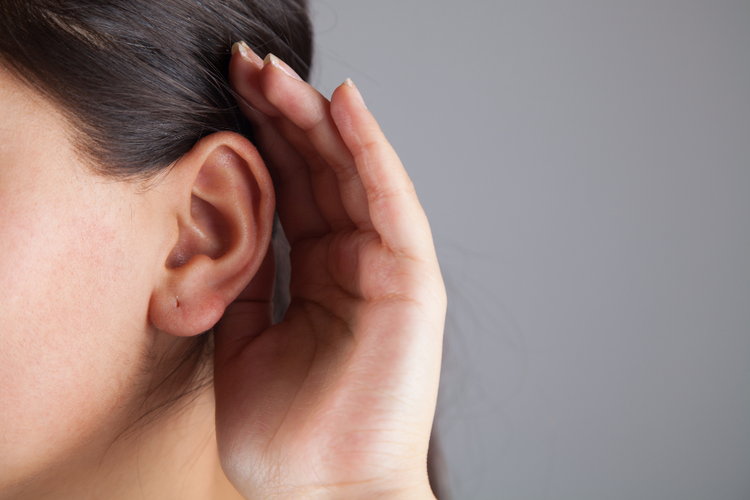
Person cupping ear to show difficulty hearing as symptom of conductive or sensorineural hearing loss.

Who Should Consider an Audiometry Test?

An audiometry test can be considered by individuals who notice changes in hearing, have ongoing ear-related symptoms, or require routine hearing assessments for work or health monitoring. This includes those who:

  • Struggle to hear conversations, especially in noisy places
  • Notice muffled or unclear sounds
  • Experience ringing, buzzing, or discomfort in the ears
  • Experience age-related changes that affect hearing clarity
  • Work in environments with prolonged or excessive noise exposure
  • Have a history of chronic or recurrent ear infections
  • Are required by their employers to undergo regular hearing checks as part of workplace safety programmes

What Happens During an Audiometry Test?

An audiometry test involves a series of listening tasks that assess hearing across different tones, pitches, and speech patterns.

These tasks may include pure-tone audiometry (air conduction), bone conduction testing, and speech audiometry. Not all components are required for every individual, and the tests performed depend on age, symptoms, and the purpose of the assessment.

You usually sit in a quiet room with headphones while sounds are played through an audiometer (a device that produces controlled tones and speech for hearing assessment), and you indicate whenever a tone or word is heard.
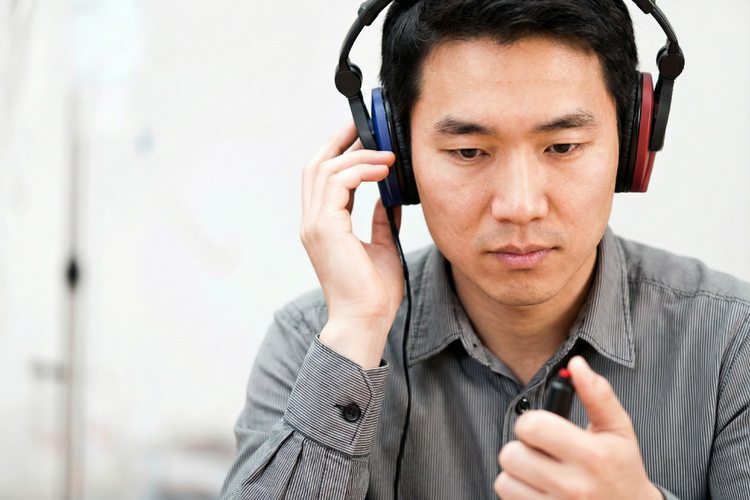
Man using headphones during audiometry test while indicating responses for hearing assessment.

Pure-Tone Audiometry (Air Conduction)

Pure-tone audiometry measures the quietest sounds that can be heard at different pitches using headphones. A series of beeps is played at various frequencies and volumes, and the softest ones detected are recorded to form the basis of the audiogram.

Bone Conduction Testing

Bone conduction testing assesses how well the inner ear receives sound by sending gentle vibrations through a small device placed behind the ear. This test is usually performed when air conduction results suggest a possible hearing issue, as it helps determine whether any hearing loss is related to the outer or middle ear (conductive) or the inner ear or hearing nerve (sensorineural).

Speech Audiometry

Speech audiometry evaluates how clearly spoken words are understood at different volumes. Words or sentences are played through the headphones, and the responses provide information about speech clarity and overall hearing function.

What Do Audiometry Results Mean?

Audiometry findings are presented in different ways depending on the type of test performed:

Type of Audiometry Interpretation
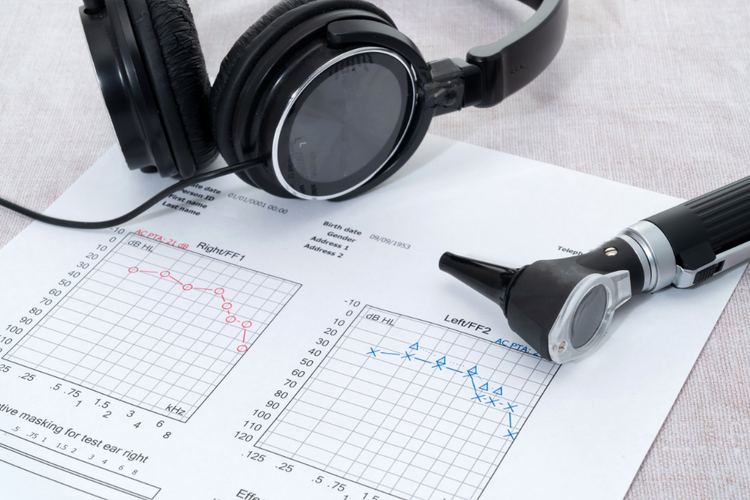
Air Conduction Thresholds are plotted on an audiogram to show whether hearing falls within a normal range or reflects mild, moderate, or more severe loss.
Bone Conduction Thresholds are marked on the same audiogram to indicate whether changes arise from the outer or middle ear (conductive) or from the inner ear or hearing nerve (sensorineural).
Speech Audiometry Speech understanding is shown as a percentage score based on how many spoken words are correctly repeated at different loudness levels.
Hearing loss chart audiogram with headphones and otoscope showing hearing patterns of both ears.

Your doctor will review these findings with you and explain whether further evaluation or specialised care is recommended.

How Much Does An Audiometry Test Cost?

At ATA Medical, we provide pure-tone audiometry (air conduction) and bone conduction at our Jurong clinic as part of our broader health assessment services. The prices for this test and other related assessments are as follows:

Test Price*
Consultation From $49.05
Pure-Tone Audiometry (Air Conduction, Bone Conduction if required) $54.50
Retinal Imaging From $54.50
Digital Brain Function Screen (DBFS) From $38.15
*Prices are NETT and inclusive of GST.

We also offer audiometry testing at a corporate level, along with other workplace health services provided by our Designated Workplace Doctors (DWD).

For a more comprehensive review of your health, you may also consider our health screening packages.

How Long Does an Audiometry Test Take?

At our clinic, the audiometry test itself typically takes about 3 to 5 minutes to complete during off-peak hours, excluding consultation time. For statutory testing, a consultation is not required.

Contact us to find the most suitable time to book your appointment.

How to Prepare for an Audiometry Test?

There are no specific compulsory steps before an audiometry test, but certain measures can help ensure more accurate and reliable results. These may include:

  • Avoiding loud noise for at least 12 to 24 hours before the test
  • Informing the doctor of any ear infections, recent ear procedures, or ear-related symptoms

How to Book an Appointment For an Audiometry Test?

ATA Medical @ Jurong

Address: 21 Jurong Gateway Rd, #02-08 CPF Jurong Building, Singapore 608546
Nearest MRT: Jurong East MRT Station (NS1/EW24)
Contact Number: 6348 6292
Email: hi@atamed.sg
Opening Hours:
Mon - Fri: 8:30 AM to 12:30 PM, 1:30 PM to 5:30 PM
Sat: 8:30 AM to 12:30 PM
Sun & PH: Closed

Navigate to Us

ATA Medical (CPF Jurong Building)

Frequently Asked Questions (FAQs)

An audiometry test shows the quietest sounds you can hear at different pitches, helping determine whether your hearing falls within a normal range or reflects issues involving the outer or middle ear (conductive loss) or the inner ear or hearing nerve (inner-ear–related loss). It also assesses how clearly speech is understood. The results appear on an audiogram, which maps hearing thresholds and helps identify patterns that may guide further evaluation.
The normal range for an audiometry test generally refers to hearing thresholds between 0 and 25 decibels across tested frequencies. Results within this range usually indicate that everyday sounds can be heard clearly. Thresholds above this range may reflect varying degrees of hearing loss, which your doctor or specialist can interpret in relation to your symptoms and overall hearing function.
The three commonly used types of audiometry are pure-tone audiometry, bone conduction testing, and speech audiometry. Pure-tone testing assesses hearing through headphones, bone conduction evaluates inner ear function using gentle vibrations, and speech audiometry measures how clearly spoken words are understood. Together, these tests provide a broad picture of hearing ability.
An audiometry test is not considered painful because it involves listening to tones or speech through headphones or a small vibration device. The sounds are controlled and gradually adjusted to identify the quietest levels you can hear. If ear pain, dizziness, or discomfort is already present, timely assessment is advisable as these symptoms may indicate an underlying condition.
Three common warning signs of hearing loss include difficulty understanding speech, especially in noisy places; frequently increasing the volume on devices; and noticing ringing, buzzing, or muffled sounds. If these symptoms persist or worsen, it is advisable to consult a doctor or ENT specialist to assess for possible hearing-related conditions.
A hearing test cannot diagnose a tumour, but certain patterns of hearing loss may prompt further investigation if they raise concern. For example, asymmetrical hearing loss or associated symptoms such as persistent one-sided ringing or dizziness may warrant additional imaging. If you experience such symptoms, prompt assessment by a doctor is advisable.
Audiometry results are read by looking at the audiogram, which plots the quietest sounds you can hear at each pitch. Lower points on the graph indicate better hearing, while higher points suggest reduced sensitivity. Certain patterns can show whether hearing changes come from the outer or middle ear or from the inner ear or hearing nerve. A doctor can explain how these findings relate to your symptoms and overall hearing.
Audiometry does not detect tinnitus directly because tinnitus is a subjective sound perceived without an external source, but the test can identify hearing patterns commonly associated with it. Many individuals with tinnitus also have underlying hearing loss, so audiometry helps guide further evaluation.
The four types of hearing loss are conductive, sensorineural, mixed, and auditory processing-related. Conductive loss involves the outer or middle ear, while sensorineural loss affects the inner ear or auditory nerve. Mixed loss combines both, and auditory processing issues involve difficulty interpreting sound despite normal hearing thresholds.
At ATA Medical, pure-tone audiometry (air conduction) is priced at $54.50 NETT, with consultation fees charged separately. Bone conduction testing is also available at the same price and is usually performed when pure-tone audiometry findings suggest a possible hearing issue. We also provide other assessments, such as eye-related checks or chronic disease management, as part of our comprehensive GP screening services.
After audiometry, your doctor will review the audiogram, which is usually based on pure-tone audiometry, and explains whether hearing falls within a normal range. If bone conduction testing was performed, the results help show whether any changes are linked to the outer or middle ear (conductive hearing loss) or the inner ear or hearing nerve (sensorineural hearing loss). Depending on the findings, follow-up may include monitoring, examination of the ears, additional diagnostic tests, or referral to a specialist for further assessment.
A hearing test does not diagnose diseases directly, but it can reveal hearing patterns linked to conditions such as age-related hearing loss, chronic ear infections, noise-related damage, or issues involving the inner ear or hearing nerve. Asymmetrical results or sudden changes may prompt further evaluation for underlying causes such as infections, fluid in the ear, or, less commonly, nerve-related disorders.
Hearing ability cannot usually be restored naturally once permanent loss occurs, but certain measures may help protect remaining hearing and improve communication. Avoiding loud noise, managing chronic ear conditions, and keeping ears free of excess wax may support overall hearing health. Using practical approaches such as sitting closer to speakers, choosing quieter environments, or using assistive devices can also make conversations easier.
At ATA Medical, an audiometry test generally takes about 3 to 5 minutes for the actual test, excluding the review and consultation if required. You can contact us to find the most suitable time to schedule an appointment.
Failing a hearing test usually refers to thresholds above the normal range of 0 to 25 decibels, indicating reduced sensitivity to sound. The degree of hearing loss may be mild, moderate, severe, or profound, depending on how far thresholds deviate from normal. Your doctor or specialist will interpret the audiogram in relation to symptoms and determine whether further evaluation is needed.
A hearing test does not usually cause vertigo because it involves listening to controlled tones or gentle vibrations. However, individuals with underlying inner ear conditions may feel dizzy during or after testing, as these conditions can be sensitive to sound or movement. If vertigo occurs during the test or develops afterward, inform your doctor so the symptoms can be assessed appropriately.