

MRI Scan Singapore
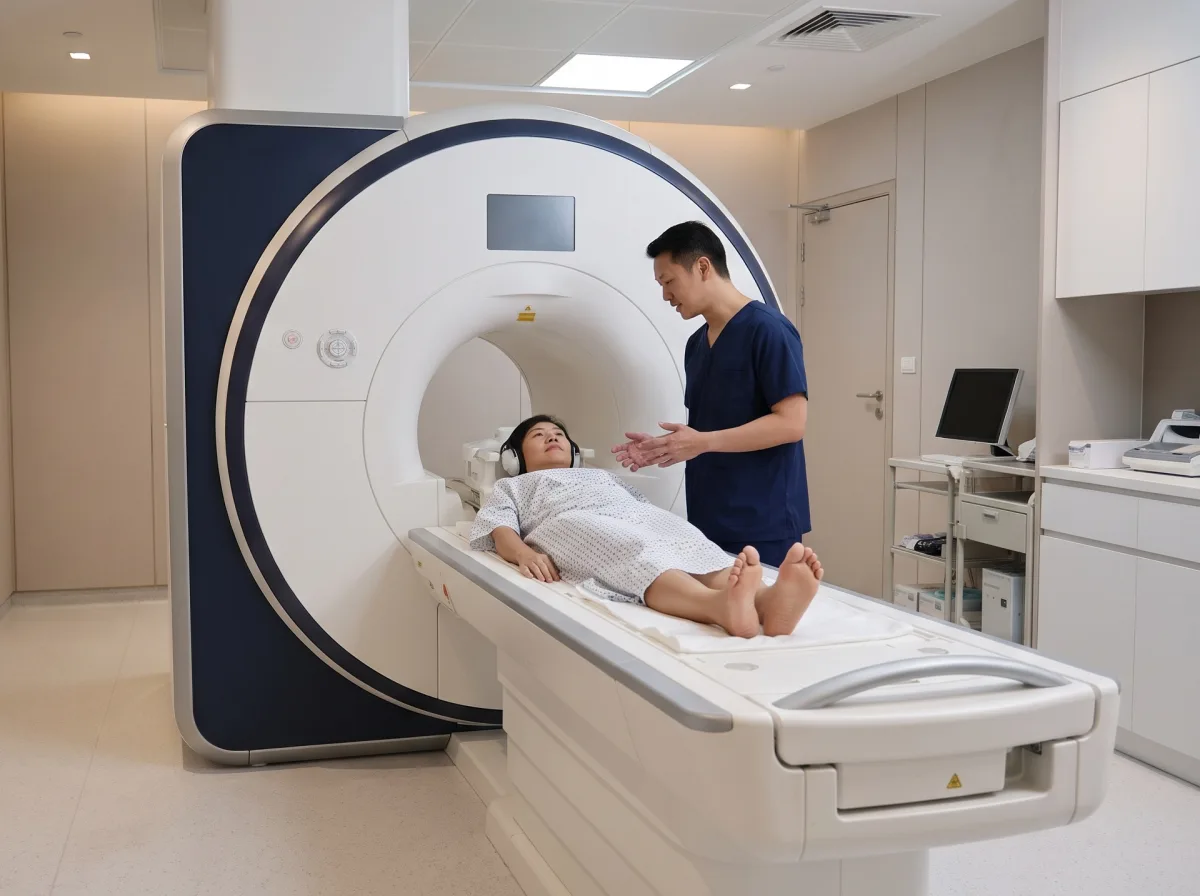
Detailed scans of the brain, spine, joints and other organs
- MRI scans from $1,090 (nett, inclusive of GST)
- Results reviewed and explained by our doctors
- MediSave may be used for eligible scans, subject to the relevant criteria

Last updated: Nov 25, 2026
What Is an MRI Scan?
A magnetic resonance imaging (MRI) scan is a non-invasive imaging test that uses a strong magnetic field, radio waves and a computer to produce detailed cross-sectional pictures of the inside of the body. MRI shows soft tissues such as the brain, spinal cord, muscles, ligaments and organs in fine detail, which can help find the cause of symptoms or follow a known condition.
At ATA Medical, we are a MediSave-accredited clinic, so eligible scans may be claimed, subject to the relevant criteria. Please contact us for more information.
How Does an MRI Work?
An MRI works by using a strong magnetic field and pulses of radio waves to pick up signals from the water in the body's tissues. The magnetic field lines up tiny particles called protons in the water molecules, and each radio wave pulse briefly pushes them out of line, so that they release energy as they move back into line.
The scanner's sensors detect this energy, and a computer turns it into pictures that can show small differences between types of soft tissue. MRI does not use ionising radiation, the type of radiation used in X-rays and CT scans, which is one of the main differences between a CT scan and an MRI.
What Can an MRI Detect?
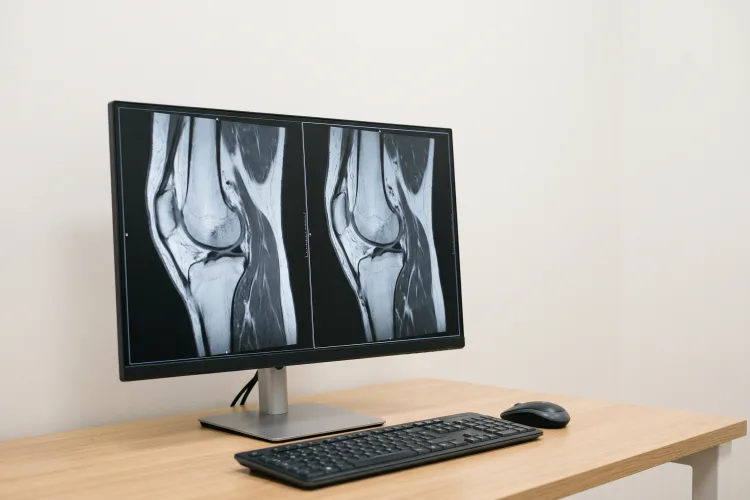
An MRI can show injuries, tumours, inflammation and other changes in the soft tissues to help assess conditions in different areas of the body.
- Brain: stroke and stroke damage, brain tumours, bleeding or damage after a head injury, multiple sclerosis and some causes of seizures.
- Head and neck: lumps, swellings and enlarged lymph nodes in the neck, throat and the space behind the nose.
- Spine: injuries to the bones, discs, ligaments and spinal cord, and disc changes caused by wear and tear.
- Joints and limbs: injuries to the muscles and ligaments, and signs of wear and tear or inflammation in the shoulders, elbows, wrists, hands, hips, knees and feet.
- Abdomen: changes in the size or structure of the liver, kidneys, pancreas, gallbladder and spleen, such as cysts or fatty changes.
- Pelvis and prostate: changes in the pelvic organs that may be seen in some prostate, ovarian or uterine conditions.
MRI is also used to monitor known tumours and track how they respond to treatment. A full body MRI covers several of these areas in one session, from the brain down to the mid-thigh, although it is not suitable for everyone, as it can show harmless changes that lead to more tests.
Is an MRI Safe? Side Effects and Risks
An MRI is generally safe for most people, as it does not use ionising radiation and serious complications are rare, but the strong magnetic field and the enclosed scanner can affect some people. The main side effects and risks to know about are:
- Noise: the scanner's loud knocking may be uncomfortable for some people, although ear protection is provided.
- Lying still: staying still for the whole scan may be uncomfortable, especially with back or joint pain.
- Enclosed space: some people may feel closed in or frightened, especially with claustrophobia (a fear of enclosed spaces), and a relaxing medicine may be available.
- Contrast agent: a dye injected into a vein in some scans to make tissues clearer may cause mild nausea or a headache, and rarely an allergic reaction.
- Metal implants and devices: some pacemakers, nerve stimulators and other devices may malfunction in the magnetic field, though many newer ones can be scanned with special steps, and most bone and joint implants generally pose little or no risk.
- Pregnancy: an MRI has no known risk in pregnancy in general, but contrast agents are usually avoided as a precaution.
Please tell us before the scan if you are pregnant or may be pregnant, have claustrophobia or kidney problems, or have had a reaction to a contrast agent. Please also let us know about any metal implant or device in your body, such as a pacemaker, a cochlear implant (a hearing device placed in the ear) or surgical clips, or if you have ever had a metal fragment in your eye or body, for example from metalwork.
What to Expect During Your MRI Scan
An MRI scan is usually straightforward and follows these steps:
- Before the scan, you change into a gown and remove all metal items, such as jewellery, watches, hair clips and hearing aids.
- You lie flat on the scanner's motorised table, which moves slowly into the scanner, a tube-shaped machine.
- The scanner makes loud knocking sounds while it takes the pictures, and earplugs or headphones are given to protect your ears. In some scans, a contrast agent is injected into a vein to make certain tissues clearer.
- You keep as still as possible throughout the scan, and you may be asked to hold your breath for short periods, so that the pictures come out clear.
An MRI scan itself is usually painless, although lying still for a long time may feel uncomfortable.
You can eat and drink as normal after the scan. If you were given a medicine to help you relax, you should not drive for 24 hours.
How Long Does an MRI Take?
An MRI scan usually takes about 30 to 60 minutes, while a full body MRI usually takes 60 to 90 minutes. These times cover the scan itself and do not include the doctor's consultation.
How to Prepare for Your MRI Scan
Do I Need to Fast Before an MRI?
You do not usually need to fast before an MRI, but some scans may need you to fast or stop certain medicines, depending on the type of scan and your condition. Our staff will advise you on the preparation steps once your MRI appointment is confirmed.
What to Bring
Bring your identification card (IC), your referral letter and the details of any implant or medical device in your body to your MRI appointment:
- Identification: your identification card (IC) or other identity documents.
- Referral letter: a valid referral letter, if you have one, as a consultation with our doctor comes first without one.
- Implant details: the exact type of any implant or device, such as a pacemaker, so that its suitability for the scan can be checked.
MRI Scan Cost in Singapore
At ATA Medical, MRI scans start from $1,090*, and the cost depends on the body part scanned.
| Scan | Price* |
|---|---|
| Consultation | From $49.05 |
| Spine | From $1,090 |
| Hand (per side) | $1,090 |
| Wrist (per side) | $1,090 |
| Forearm (per side) | $1,090 |
| Elbow (per side) | $1,090 |
| Shoulder (per side) | $1,090 |
| Foot (per side) | $1,090 |
| Knee (per side) | $1,090 |
| Thigh / Femur (per side) | $1,090 |
| Hip (per side) | $1,090 |
| Pelvis | From $1,613.20 |
| Brain | From $1,122.70 |
| Stroke Screen (includes MRA, COW & Carotids) | $1,231.70 |
| Neck / Nasopharynx / Oropharynx / Post Nasal Space | $1,504.20 |
| Abdomen (Kidney, Liver, Pancreas, Gallbladder & Spleen) | $1,613.20 |
| Prostate | $1,613.20 |
| Full Body | $4,388 |
| All others | Please enquire |
^Prices last updated on Oct 01, 2026. While every effort is made to keep pricing information up to date, please contact our team to confirm the latest rates.
Note: All MRIs are done at our partner radiology centres.
If you cannot find what you need, or would like to clarify more, please feel free to WhatsApp or call our friendly staff.
Can I Use MediSave to Pay for My MRI Scan?
MediSave can generally be used for an MRI scan needed to diagnose or treat a medical condition, up to $600 per patient each year, subject to the relevant criteria. This $600 allowance does not cover plain X-rays or scans already claimable under other MediSave schemes, so please check with us whether your scan is eligible.
Can I Claim Insurance for My MRI Scan?
Insurance cover for an MRI scan depends on your insurance policy and plan, so please check with your insurer what your plan covers before the scan. You can also enquire with us to check whether your insurance can be used at our clinic.
Where Are Our Clinics Located?
ATA Medical is conveniently located at four different locations:
- Tanjong Pagar Clinic: 4-minute walk from Tanjong Pagar MRT station (EW15)
- Orchard Clinic: 2-minute walk from Orchard Boulevard MRT station (TE13)
- Jurong Clinic: 5-minute walk from Jurong East MRT station (EW24/NS1)
- Novena Clinic: 2-minute walk from Novena MRT station (NS20)
To book an appointment or enquire, please WhatsApp or call us at 88750352 or email us at [email protected].
Why Use Us?
Friendly Staff
Our friendly staff arrange your MRI scan, which is done at our partner radiology centres.MediSave-Claimable
Our clinics are MediSave-accredited. MediSave may be used for eligible scans, subject to the relevant criteria.One-Stop Medical Centre
We are a one-stop health screening centre with Chest X-Ray, Mammogram, and Ultrasound Scan.How Do I Book an MRI Scan in Singapore?
ATA Medical @ Tanjong Pagar
Sat: 8:30 AM – 12:30 PM
Sun & PH: Closed
Last appt: 5:15 PM (Mon–Fri), 12:15 PM (Sat)
ATA Medical @ Orchard
Sat: 8:30 AM – 12:30 PM
Sun & PH: Closed
Last appt: 5:15 PM (Mon–Fri), 12:15 PM (Sat)
ATA Medical @ Jurong
Sat: 8:30 AM – 12:30 PM
Sun & PH: Closed
Last appt: 5:15 PM (Mon–Fri), 12:15 PM (Sat)
ATA Medical @ Novena
Sat: 8:30 AM – 12:30 PM
Sun & PH: Closed
Last appt: 5:15 PM (Mon–Fri), 12:15 PM (Sat)