

What Is a Hearing Test?
A hearing test is an audiological assessment that measures how well you detect and interpret sounds across different pitches and volumes.
Different types of hearing test check different aspects of your hearing, such as your hearing thresholds (the softest sounds you can hear at different frequencies), your middle-ear function and how well you understand speech. The results show whether you have any hearing loss and how it may affect your daily communication.
Hearing tests are usually quick, painless and non-invasive, and they are carried out in a controlled clinical setting.

What Are the Different Types of Hearing Loss?
Hearing loss can occur when sound cannot travel properly through the ear, when the inner ear or hearing nerve does not process sound well, or when both issues are present. These changes are generally described as conductive hearing loss, sensorineural hearing loss, or mixed hearing loss.
Conductive Hearing Loss
Conductive hearing loss occurs when sound is blocked or reduced in the outer or middle ear. Common causes include earwax build-up, middle-ear fluid, ear infections, or problems with the eardrum or tiny middle-ear bones. This type may improve once the underlying issue is treated.
Sensorineural Hearing Loss
Sensorineural hearing loss occurs when the inner ear or hearing nerve does not function as well as it should. Ageing, long-term noise exposure, or certain inner-ear conditions such as Ménière's disease or infections may contribute. This type is usually permanent, but hearing aids or other interventions may help with communication.
Mixed Hearing Loss
Mixed hearing loss occurs when both conductive and sensorineural factors are present. This means sound may be affected by blockages in the outer or middle ear as well as changes in the inner ear or hearing nerve.
What Can Cause Hearing Loss?
Conductive and sensorineural hearing loss can occur due to ageing, noise exposure, infections, structural issues in the ear, or certain medical conditions. Common causes include:
- Age-related inner-ear changes
- Repeated or sudden exposure to loud noise
- Earwax blockage
- Middle-ear infections or fluid
- Conditions such as diabetes or chronic ear disease
- Damage to inner-ear structures
Temporary hearing changes can also occur during colds or allergies when the middle ear becomes congested.
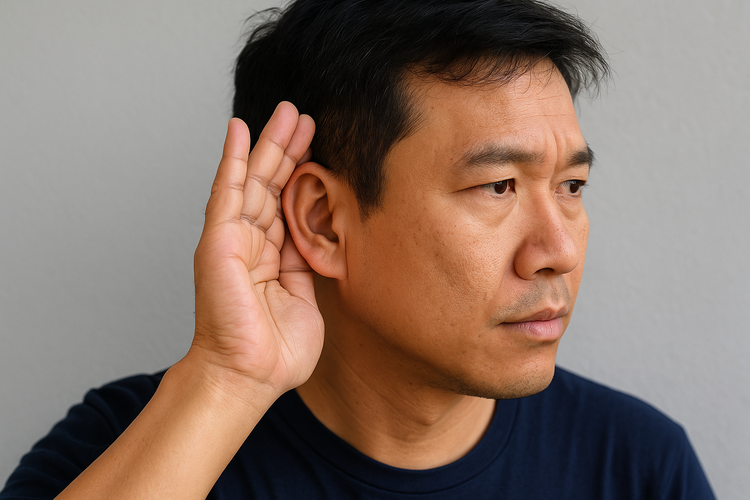
What Are the Various Types of Hearing Tests?
Different types of hearing tests assess specific aspects of your hearing, ranging from how well you detect soft sounds to how effectively your middle ear and auditory system process speech.
| Hearing Test | Description |
|---|---|
| Otoscopic Ear Examination | An otoscopic examination assesses the ear canal and eardrum for signs of earwax blockage, infection or inflammation, fluid behind the eardrum, and structural abnormalities. |
| Pure-Tone Audiometry (PTA) | Pure-tone audiometry measures how well you detect tones of different frequencies and volumes to identify whether any hearing loss is present across specific pitches. You wear headphones and respond each time you hear a sound. |
| Bone Conduction | Bone conduction testing checks how well the inner ear receives sound using gentle vibrations behind the ear. It is usually performed when air conduction results suggest hearing loss, helping distinguish conductive from sensorineural causes. |
| Tympanometry | Tympanometry checks how your eardrum responds to small changes in air pressure. This test helps detect the presence of middle-ear fluid, reduced eardrum mobility, and Eustachian tube problems. |
| Speech Discrimination Test | A speech test assesses how clearly you understand spoken words. You listen to words presented at different volumes, and the percentage of words you correctly repeat indicates how well you recognise speech in everyday communication environments. |
What Do Hearing Test Results Mean?
Hearing test results are presented differently depending on the assessments performed:
- Pure-Tone Audiometry (PTA) – Shown on an audiogram displaying air-conduction thresholds across frequencies, indicating the degree of hearing loss.
- Bone Conduction – Plotted on the same audiogram to show inner-ear hearing levels and, when compared with air-conduction results, distinguish conductive from sensorineural loss.
- Tympanometry – Presented as a tympanogram showing eardrum movement, indicating normal function, middle-ear fluid, or Eustachian tube issues.
- Speech Discrimination Test – Shown as a percentage score that reflects how accurately you recognise spoken words at specific loudness levels.
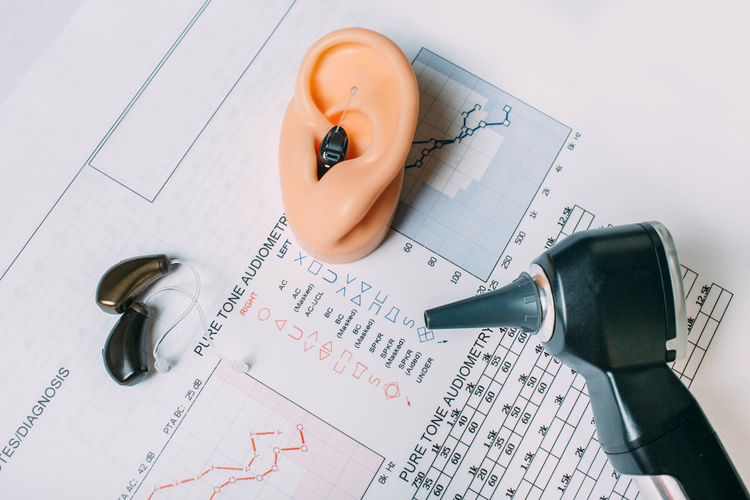
When Should You Consider a Hearing Test?
You should consider a hearing test if you experience persistent difficulty
hearing or notice changes in your ability to follow conversations.
Common signs and reasons that suggest you may need a hearing check include:
- Difficulty hearing in noisy places
- Frequently asking others to repeat themselves
- Increasing the volume on your devices
- Ringing or buzzing sounds
- A sense of fullness in the ears
- Working in noisy environments or noticing age-related hearing changes
How Much Does a Hearing Test Cost in Singapore?
At ATA Medical, we offer pure-tone audiometry (air conduction) and bone conduction at our Jurong clinic as part of our wider range of health assessment services. The prices for audiometry and other related tests are as follows:
| Test | Price* |
|---|---|
| Consultation | From $49.05 |
| Pure-Tone Audiometry (Air Conduction, Bone Conduction if required) | $54.50 |
| Retinal Imaging | From $54.50 |
| Digital Brain Function Screen (DBFS) | $60 |
^Prices last updated on Sep 23, 2026. While every effort is made to keep pricing information up to date, please contact our team to confirm the latest rates.
We also provide audiometry for companies through our workplace
health services delivered by our Designated
Workplace Doctors (DWD).
You may also consider our comprehensive
health screening packages for a more holistic review of your health.
How Should You Prepare for a Hearing Test?
To support accurate and reliable test results and ensure a smoother testing process, consider the following:
- Avoid loud noise exposure for at least 12 to 24 hours before your appointment
- Note situations where you struggle to hear
- Bring past hearing records or hearing aids, if applicable
- Inform the doctor about any recent colds, allergies, or ear discomfort
Can Hearing Loss Be Prevented?
Hearing loss can be reduced or delayed by adopting healthy hearing habits and seeking early assessment. You can help protect your hearing by:
- Using earplugs or earmuffs in noisy settings
- Reducing the volume of personal audio devices
- Taking listening breaks during loud events
- Attending regular hearing checks if you are at risk
- Managing underlying conditions such as diabetes
How to Book a Hearing Test?
ATA Medical @ Jurong
Sat: 8:30 AM – 12:30 PM
Sun & PH: Closed
Last appt: 5:15 PM (Mon–Fri), 12:15 PM (Sat)