

Tibolone for Menopause: Uses, Side Effects & Costs
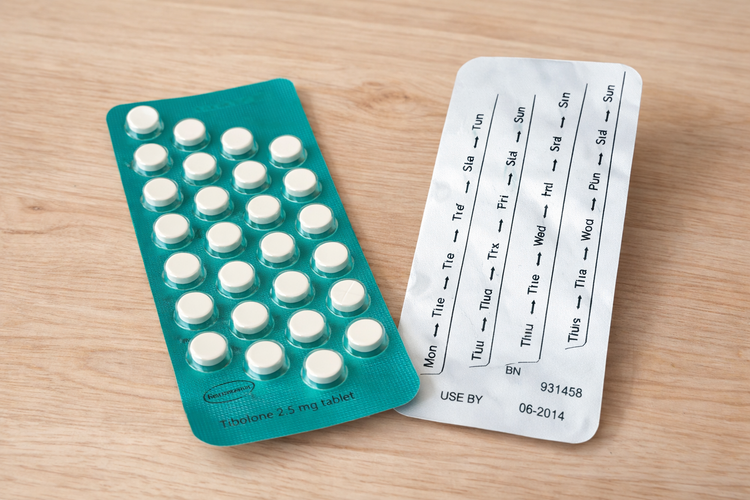
Tibolone Consultation for Menopause Symptom Relief
- Consultation from $65.40 (NETT, inclusive of GST)
- Single-tablet hormone therapy combining oestrogenic, progestogenic, and androgenic effects
- Personalised care by our women's health doctors

Last updated: Sep 15, 2026
What Is Tibolone?
Tibolone is a synthetic hormone used to relieve menopausal
symptoms such as hot flushes, night sweats, and vaginal dryness. It belongs to
a class of medications known as menopausal hormone therapy (MHT), the term that has
replaced "hormone replacement therapy" (HRT) in current medical practice.
Though classified as MHT, tibolone works differently from conventional formulations such as
oestrogen-only tablets or combined oestrogen-progestogen therapies.
Tibolone Mechanism of Action: How Does It Work?
Once absorbed, tibolone acts as a prodrug, meaning it converts into three active compounds (metabolites) in the body, each acting like a different hormone:
- Oestrogenic metabolites help reduce hot flushes, night sweats, and vaginal dryness by restoring some of the oestrogen your body loses during menopause.
- Progestogenic metabolites protect the uterine lining (endometrium) from excess growth, reducing the need for a separate progestogen medication.
- Androgenic metabolites may support libido, energy levels, and mood through testosterone-like activity.
These metabolites are tissue-selective, meaning their effects vary depending on which part of the body they reach. This is why a single tablet can address multiple menopausal symptoms without requiring separate hormone medications.
Tibolone vs MHT
The main difference between tibolone and conventional MHT is that tibolone combines oestrogenic, progestogenic, and androgenic effects in a single tablet, whereas standard MHT typically requires separate oestrogen and progestogen medications.
| Feature | Tibolone | Conventional MHT |
|---|---|---|
| Formulation | Single tablet | Oestrogen alone or oestrogen + progestogen (tablets, patches, gels) |
| Hormonal activity | Oestrogenic, progestogenic, and androgenic | Primarily oestrogenic (with added progestogen for women who still have a uterus, to protect the uterine lining) |
| Vaginal bleeding | Less likely to cause irregular bleeding | May cause withdrawal bleeding (cyclical MHT) or irregular spotting |
| Effect on libido | May improve libido due to androgenic activity | Variable; depends on formulation |
| Bone protection | Helps maintain bone density | Helps maintain bone density |
| Effect on breast tissue | Acts differently depending on the tissue; does not act on breast tissue in the same way as standard oestrogen | Oestrogen acts directly on breast tissue |
Tibolone is generally prescribed for postmenopausal women who are at least 12 months past their last menstrual period. Conventional MHT can be started earlier during perimenopause, making it suitable for a broader range of women experiencing hormonal changes.
Symptoms Tibolone Can Help Manage
Tibolone is primarily prescribed to relieve common menopausal symptoms and may also help with bone health. Symptoms it can address include:
Hot Flushes and Night Sweats
Hot flushes and night sweats, known medically as vasomotor symptoms, are among the most common reasons women seek treatment during menopause. Tibolone's oestrogenic activity helps reduce the frequency and severity of these episodes, with many women noticing improvement within a few weeks of starting treatment.
Vaginal Dryness and Discomfort
Declining oestrogen levels during menopause can cause the vaginal lining to become thinner and drier, leading to discomfort and pain during intercourse. Tibolone can help restore moisture and elasticity to vaginal tissues.

Low Libido
Unlike standard oestrogen-only MHT, tibolone has androgenic properties that may improve sexual desire and arousal. This makes it a consideration for women who experience a noticeable drop in libido during menopause.
Mood Changes
Some women experience mood swings, irritability, or low mood during menopause. Tibolone's combined hormonal activity may help stabilise mood, though individual responses vary.
Bone Loss
Tibolone helps maintain bone mineral density in postmenopausal women, reducing the risk of osteoporosis-related fractures. While it is not typically a first-line treatment for osteoporosis, it provides bone-protective benefits alongside symptom relief.
Experiencing menopausal symptoms that are affecting your daily life? Speak with our women's health doctors about whether tibolone may be suitable for you.
Book Your Appointment TodayTibolone Dose

Tibolone is typically prescribed as a 2.5 mg tablet
taken once daily. It is intended for postmenopausal women who are at least 12
months past their last natural period, as starting earlier may increase the
likelihood of irregular bleeding.
The tablet can generally be taken with or without food, and consistency in timing each day
helps maintain steady hormone levels. If a dose is missed, the usual guidance is to take it
as soon as you remember unless more than 12 hours have passed, in which case skip the missed
dose. Do not take two doses to make up for it.
There is no fixed treatment duration. Periodic review of your prescription is required to
assess whether continuing tibolone remains appropriate based on your symptoms and overall
health.
Who Might Tibolone Not Be Suitable For?
Tibolone is not suitable for everyone. It is generally not recommended if you:
- Have a history of breast cancer or other hormone-sensitive cancers
- Have active or recent blood clots (deep vein thrombosis or pulmonary embolism)
- Have a history of stroke or heart disease
- Have unexplained vaginal bleeding
- Have untreated endometrial hyperplasia (abnormal thickening of the uterine lining)
- Have active liver disease or a history of liver tumours
- Are still having menstrual periods or are less than 12 months postmenopausal
- Are pregnant or breastfeeding
If you have risk factors for blood clots, cardiovascular disease, or hormone-sensitive conditions, your doctor will assess whether tibolone is appropriate for you. If tibolone or other hormonal therapies are unsuitable, non-hormonal options such as fezolinetant (Veoza), a prescription medication for hot flushes, or soy isoflavone supplements may be considered instead.
Potential Side Effects of Tibolone
Like all medications, tibolone can cause side effects, though
not everyone experiences them. Most side effects are mild and tend to settle within the first few
months of treatment.
Common side effects include:
- Breast tenderness
- Weight changes (some women report modest weight gain)
- Increased hair growth (due to androgenic activity)
Less common side effects include:
- Headache or migraine
- Skin changes such as acne or itching
- Fluid retention
- Joint or muscle pain
- Changes in liver function (detected through blood tests)
Contact your doctor promptly if you experience unusual or heavy vaginal bleeding after the first few
months of treatment, or leg swelling (possible signs of a blood clot), yellowing of the skin or eyes
(possible signs of liver problems), or new or worsening breast lumps.
Seek immediate emergency care if you experience sudden chest pain or breathlessness (possible signs
of a blood clot in the lungs), or difficulty speaking, weakness in your arm or leg, or drooping on
one side of the face (possible signs of a stroke).
Tibolone and Breast Cancer Risk
The link between tibolone and breast cancer risk is not clear-cut. Some studies have reported a
small increase in risk, while others, including research involving Asian women, have found no
increased risk or even a reduced risk. Overall, the evidence suggests that tibolone carries a lower breast cancer risk than conventional
oestrogen-progestogen therapy.
Where an increased risk has been reported, it appears to be small and linked to longer duration of
use. Your doctor can help you weigh the benefits against the risks based on your personal and family
history.
"Tibolone offers a convenient single-tablet approach to managing menopausal symptoms by
combining oestrogenic, progestogenic, and androgenic activity, making it a practical
option for postmenopausal women experiencing hot flushes, vaginal dryness, or low
libido."
— Dr Jana Lim
"Tibolone offers a convenient single-tablet approach to managing menopausal symptoms by combining oestrogenic, progestogenic, and androgenic activity, making it a practical option for postmenopausal women experiencing hot flushes, vaginal dryness, or low libido."
— Dr Jana Lim
Tibolone Prices in Singapore
At ATA Medical, we offer consultations for menopause management including tibolone, with the prices as follows:
| Test / Treatment | Price*^ |
|---|---|
| Consultation | $65.40 |
| Extended Consultation (Over 30 Minutes) | $98.10 |
| Menopausal Hormone Therapy | |
| Systemic MHT (Oral Tablets) – Tibolone | $75.21 |
| Systemic MHT (Oral Tablets) – Progesterone | $43.60 |
| Systemic MHT (Transdermal Gel) | $35.97 |
| Local Vaginal Oestrogen Therapy (Vaginal Tablet) | $70.85 |
| Non-Hormonal Options | |
| Prescription Medication (Oral Tablets) – Fezolinetant (Veoza) | $136.85 |
| Supplement (Oral Capsules) – Soy Isoflavones | $68.67 |
| Local Vaginal Moisturiser (Vaginal Pessary) – Gynella Balance | $65.40 |
| Hormone & Deficiency Testing | |
| Estradiol / Oestrogen (E2) | $32.70 |
| Follicle-Stimulating Hormone (FSH) | $32.70 |
| Thyroid Function Test (TSH) | $32.70 |
| Vitamin D Deficiency Test | $130.80 |
| DEXA Bone Densitometry | $141.70 |
|
Female Acne / Weight Gain Screen**
Testosterone, Estradiol, Progesterone, TSH, Cortisol, FSH, Luteinising Hormone (LH),
Prolactin, Dehydroepiandrosterone Sulfate (DHEAS), Sex Hormone Binding Globulin
(SHBG)
(May be recommended for those suspected with hormonal acne) |
$218 |
|
Hormonal Study
DHEAS, Insulin-like Growth Factor 1 (IGF-1), SHBG, FSH,
LH, E2
|
$196.20 |
|
Comprehensive Deficiency / Hair Loss Screen
Folate, Vitamin B12, Vitamin D, Iron, Total Iron Binding Capacity, % Iron Saturation,
Ferritin, Zinc, Magnesium, Free T4, TSH
|
$263.78 |
| Women Wellness (Full Body Screening) | From $152 |
| Breast Health Screening | |
| Mammogram | $239.80 |
| Ultrasound Breast | $163.50 |
| Mammogram with Ultrasound Breast | $327 |
^Prices last updated on Sep 15, 2026. While every effort is made to keep pricing information up to date, please contact our team to confirm the latest rates.
**Recommended to be done during days 2–5 of menstrual cycle and between 8:30 AM and 10:00 AM for accuracy.
Meet Our Female Doctors




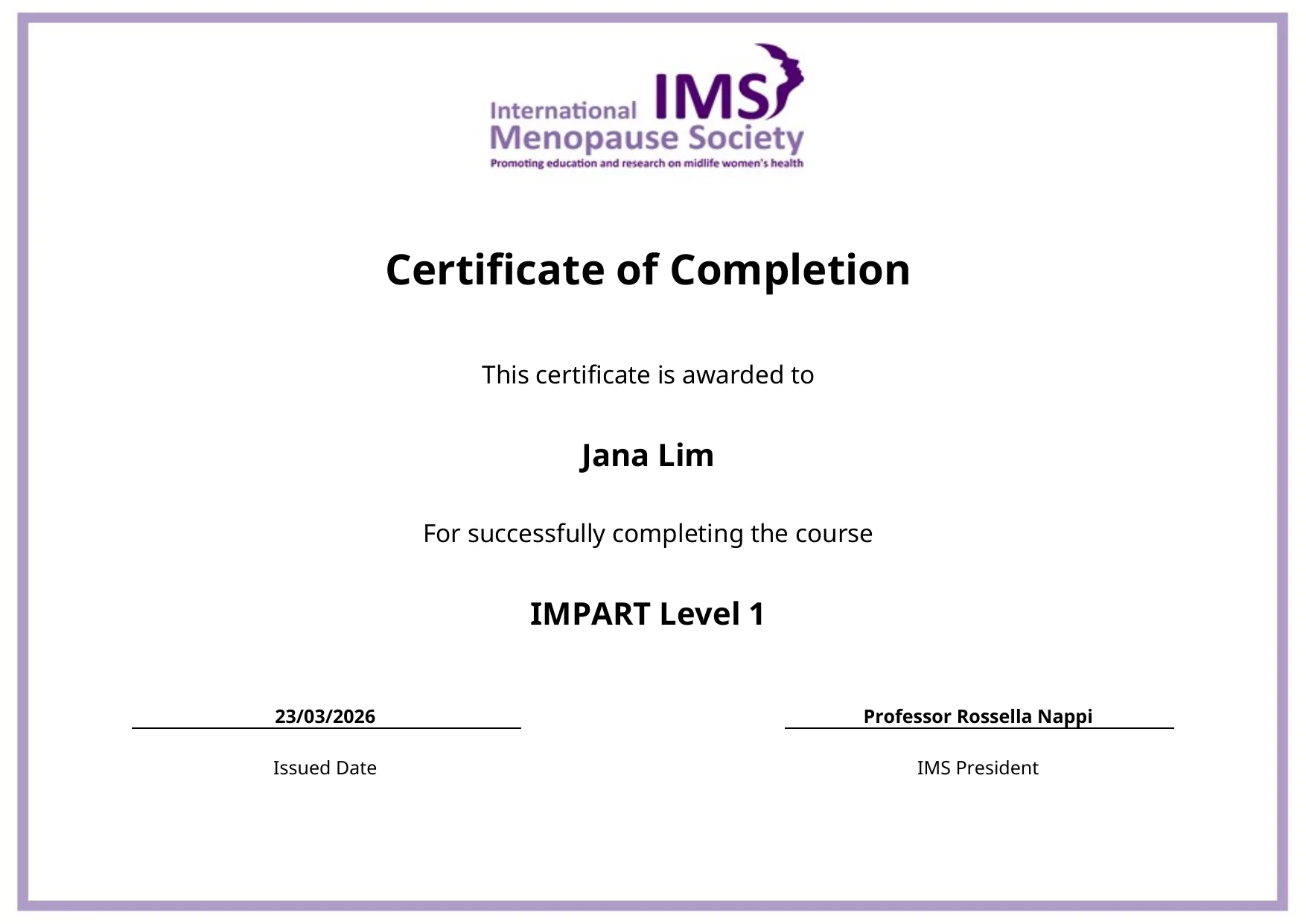
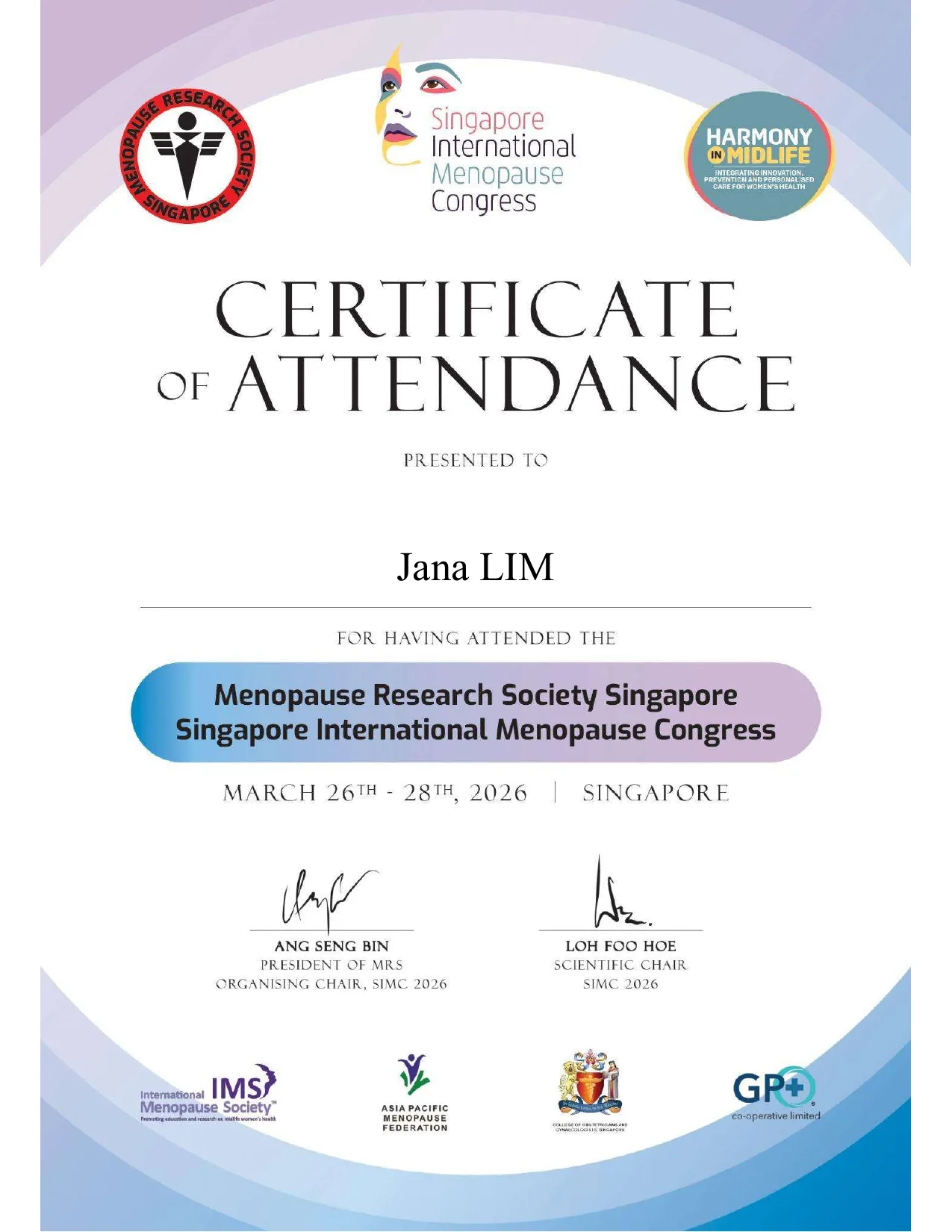
Dr Jana Lim is certified in the International Menopause Society (IMS) IMPART Programme (Level 1) and holds Entry-Level Associate Membership of the IMS. IMPART is a structured, evidence-based training programme in menopause management and menopausal hormone therapy, equipping her to support women through perimenopause and menopause.
Book a Consultation for Tibolone
ATA Medical @ Tanjong Pagar
Sat: 8:30 AM – 12:30 PM
Sun & PH: Closed
Last appt: 5:15 PM (Mon–Fri), 12:15 PM (Sat)
ATA Medical @ Orchard
Sat: 8:30 AM – 12:30 PM
Sun & PH: Closed
Last appt: 5:15 PM (Mon–Fri), 12:15 PM (Sat)
ATA Medical @ Jurong
Sat: 8:30 AM – 12:30 PM
Sun & PH: Closed
Last appt: 5:15 PM (Mon–Fri), 12:15 PM (Sat)
ATA Medical @ Novena
Sat: 8:30 AM – 12:30 PM
Sun & PH: Closed
Last appt: 5:15 PM (Mon–Fri), 12:15 PM (Sat)