

Holter Monitor Singapore
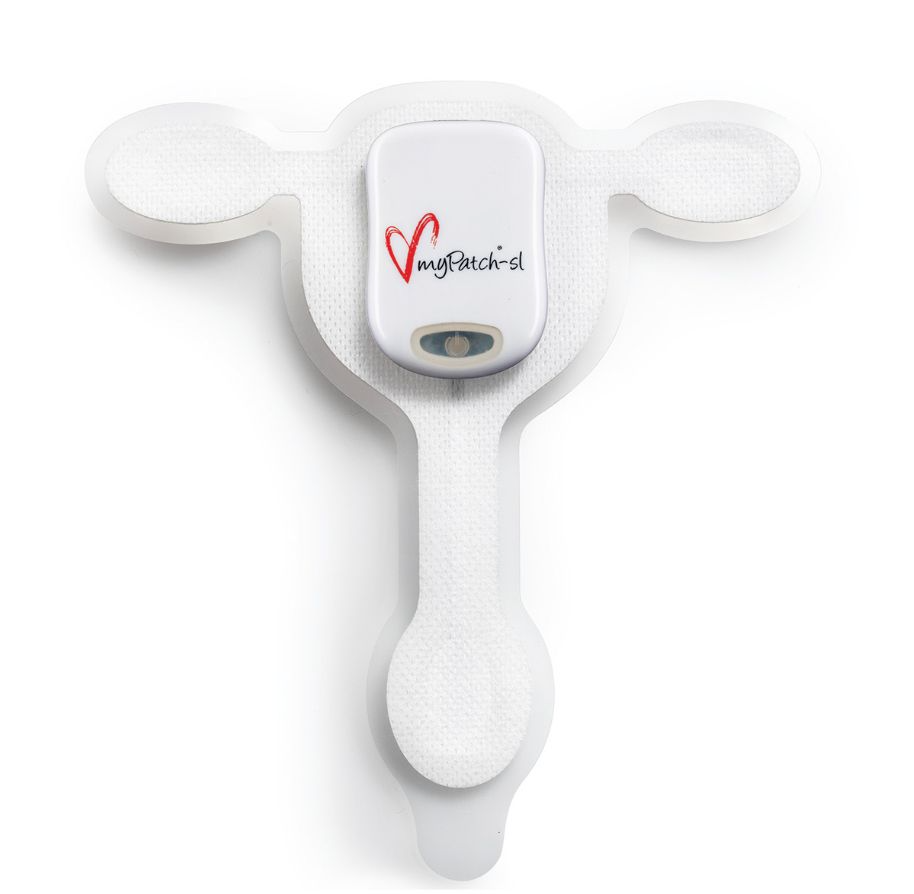
Detect Irregular Heart Rhythms with a Holter Monitor Test
- Continuous 24 to 48-hour recording to pick up rhythm changes a standard ECG may miss
- Non-invasive patch design with no external wires, worn comfortably during daily activities
- Results reviewed by our doctor with personalised recommendations

Last updated: Sep 30, 2026
What Is a Holter Monitor?
A Holter monitor is a small, portable device that records your heart's electrical activity
continuously over 24 to 48 hours, designed to catch irregular heart rhythms (arrhythmia)
throughout the day.
Unlike a standard ECG (electrocardiogram) that takes a brief snapshot lasting only a few seconds, a
Holter monitor follows your heart through sleep, meals, exercise, and stress, giving a much fuller
picture of how it behaves in real life.
The device consists of a small recorder that snaps onto an adhesive patch placed directly on the
chest. It sits flat against the skin under clothing, and you carry on with your usual routine while
it quietly records in the background.
What a Holter Monitor Detects and Its Purpose
A Holter monitor is mainly used to pick up irregular heart rhythms that may not show up
during a routine ECG, especially those that come and go unpredictably. By recording
over a longer stretch of time, it captures brief episodes that a standard test would likely miss.
Common findings include:
- Atrial fibrillation (AFib) — an irregular, often rapid rhythm from the atria (the heart's upper chambers) that raises stroke risk.
- Pauses or skipped beats — short interruptions in the normal rhythm that can cause dizziness or fainting.
- Supraventricular tachycardia (SVT) — sudden bursts of fast heartbeats originating above the ventricles (the heart's lower chambers).
- Ventricular ectopics (VE) and tachycardia — extra or abnormal beats from the lower chambers.
- Bradycardia and heart block — abnormally slow rhythms or delays in the heart's electrical signal.
- Silent ischaemia — periods of reduced blood flow to the heart muscle that may not produce obvious symptoms.
When a Holter Monitor May Be Recommended
A Holter monitor may be suggested when symptoms point to a possible heart rhythm problem but a standard ECG has not captured anything conclusive. Common situations include:
- Recurring palpitations or a fluttering sensation in the chest that comes and goes without a clear trigger.
- Dizziness or lightheadedness that occurs repeatedly, particularly if it is sudden and brief.
- Fainting episodes or near-fainting that remain unexplained after initial tests.
- Monitoring a known arrhythmia to assess how well current treatment is controlling it.
- Evaluating heart rhythm after a stroke, especially when atrial fibrillation is suspected but has not yet been confirmed.
- Checking the effect of newly prescribed heart medication on rhythm and rate.

The test is non-invasive and suitable for most people, including older adults. It may not be ideal for those with significant skin allergies to adhesive patches, though hypoallergenic alternatives are often available.
How the Holter Monitor Test Works
The Holter monitor test is straightforward and involves fitting the device, wearing it through your
daily routine, and returning it for analysis.
The whole process is painless and does not interrupt most normal activities. When
symptoms are infrequent, an extended version of the monitor can record for up to 7 to 14 days.
Fitting the Device at the Clinic
The chest is cleaned and, if needed, small patches of skin are shaved before the adhesive patch is applied and the recorder is snapped into place.
Going About Your Day
The device is worn continuously alongside a simple diary of activities, symptoms, and sleep so that any irregular beats can be matched to what was happening at the time.
Returning the Monitor
After the recording period, the device is returned to the clinic. The data is then downloaded, analysed by specialised software, and reviewed by a doctor.
Results are typically available within one to two weeks depending on the recording length.
Concerned about palpitations, dizziness, or an unexplained racing heart? Consult our doctors to find out what's behind your symptoms.
Book Your Appointment TodayWhat to Expect While Wearing a Holter Monitor
Most normal activities can continue while wearing the device, with the main restriction
being to keep it dry. The recorder is lightweight and sits comfortably under clothing,
so most people find it easy to ignore after a short while.
A few practical points:
- Light showers are permitted — keep showers brief (10 to 15 minutes), avoid soaping the chest area around the device, and pat dry thoroughly with a towel afterwards. Baths, swimming, and prolonged water exposure must be avoided.
- Stay away from strong magnets and electrical fields — MRI scanners and high-voltage equipment can interfere with the recording. Brief exposure to metal detectors is generally fine, but prolonged contact should be avoided.
- Mark symptoms on the device — double-tap the recorder when experiencing symptoms such as dizziness or palpitations. A brief blue light confirms the event has been captured.
- Keep the diary accurate — note the time of any palpitations, chest discomfort, dizziness, or unusual symptoms so they can be cross-referenced with the trace.
- Keep the device secure — gently press the edges of the patch after changing clothes or showering to ensure it remains firmly attached. Sleep on the back or side if possible.
- Avoid vigorous exercise and upper body massage — light to moderate activity is encouraged, but intense physical activity may loosen the patch or affect the recording.
- Avoid necklaces — jewellery around the neck may interfere with the device during the recording period.
Mild skin irritation or redness under the pads is common and typically settles within a few days of removing the device.
Holter Monitor vs ECG and Other Heart Tests
A Holter monitor and an ECG measure the same electrical signals, but they differ in how long they record and what kind of problem they are best suited to catch. The table below compares the most common tests used to investigate heart rhythm and function.
| Test | How It Works | Recording Duration | Considerations |
|---|---|---|---|
| Holter Monitor | Continuous portable recording of the heart's electrical activity during daily activities. | 24 to 48 hours (up to 14 days for extended versions). | Best for intermittent symptoms; water exposure guidelines vary by device. |
| ECG (Electrocardiogram) | Brief resting recording taken with electrodes on the chest, arms, and legs. | About 10 seconds. | Quick and low cost, but only captures the rhythm at the moment of testing. |
| Treadmill Stress Test | ECG recorded while walking or running on a treadmill at increasing intensity. | 10 to 15 minutes of exercise. | Useful for symptoms triggered by exertion rather than at rest. |
| 2D Echocardiogram | Ultrasound imaging of the heart's chambers, valves, and pumping function. | About 30 to 45 minutes. | Shows structure and function rather than rhythm. |
How to Prepare for a Holter Monitor Test
Preparation for a Holter monitor test is minimal, and no fasting or medication changes are usually required unless your doctor has advised otherwise. A few small steps help the patch stay in place.
- Shower beforehand for comfort, though light showers are permitted during the recording period.
- Wear a loose-fitting top on the day of fitting for easy access to the chest.
- Avoid applying lotions, oils, powders, or perfumes to the chest area.
- Keep taking usual medications unless told otherwise, and bring a list of them to the appointment.
Understanding Your Holter Monitor Results
Holter monitor results are reported as either normal, showing expected variations in heart rate, or abnormal, where specific rhythm disturbances are identified and quantified.
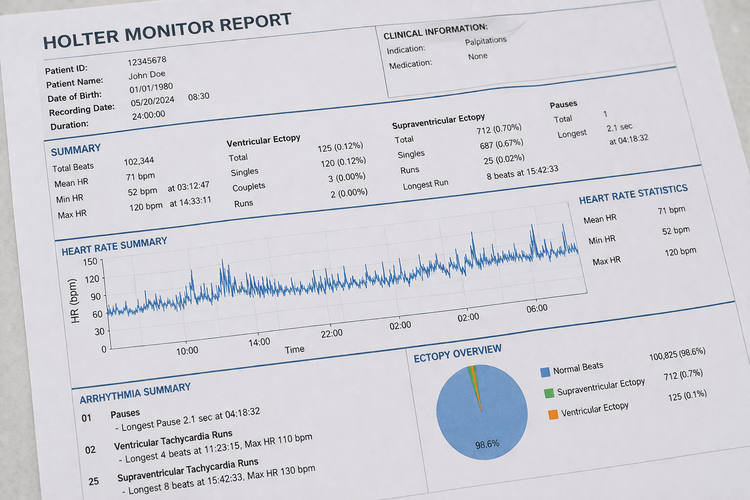
The report usually summarises the average, minimum, and maximum heart rates, the number of
abnormal beats, and any periods of concern.
A few terms that may appear on the report:
- Sinus rhythm — the heart's normal electrical pattern.
- SVE (supraventricular ectopics) — extra beats originating above the ventricles; small numbers are common and usually harmless.
- VE (ventricular ectopics) — extra beats from the lower chambers; frequent or clustered ones may need further review.
- Pauses — gaps between beats, with longer pauses warranting closer attention.
Your doctor will correlate findings with the symptom diary to decide whether further tests, lifestyle changes, or treatment are needed.
Holter Monitor Price in Singapore
At ATA Medical, we offer the Holter monitor test, alongside other heart tests, with prices as follows:
| Test | Price*^ |
|---|---|
| Consultation | From $49.05 |
| Holter Monitor (First 24 hours) (by clinic) | Jurong: $272.50 Orchard: $381.50 |
| Holter Monitor (each additional 24 hours) | $54.50 |
| ECG (Electrocardiogram) | $49.05 |
| Treadmill Stress Test with ECG | $218 |
| 2D Echocardiogram | $436 (Orchard & Jurong) |
| CT Coronary Angiogram | $1,384.30 |
| CT Calcium Score | $403.30 |
| Ultrasound Carotid Intima-Media Thickness (CIMT) Test | $163.50 |
^Prices last updated on Jul 09, 2026. While every effort is made to keep pricing information up to date, please contact our team to confirm the latest rates.
You may also wish to explore our heart check-up or health screening packages, which bundle several of these tests for a more complete assessment.
"A Holter monitor catches the kind of short, unpredictable rhythm changes that a standard ECG often misses. For patients with palpitations or unexplained dizziness, it is a simple, wearable way to get answers that shape the next step in care."
— Dr Leonard Leng
"A Holter monitor catches the kind of short, unpredictable rhythm changes that a standard ECG often misses. For patients with palpitations or unexplained dizziness, it is a simple, wearable way to get answers that shape the next step in care."
— Dr Leonard Leng
Book a Consultation for a Holter Monitor Test
ATA Medical @ Orchard
Sat: 8:30 AM – 12:30 PM
Sun & PH: Closed
Last appt: 5:15 PM (Mon–Fri), 12:15 PM (Sat)
ATA Medical @ Jurong
Sat: 8:30 AM – 12:30 PM
Sun & PH: Closed
Last appt: 5:15 PM (Mon–Fri), 12:15 PM (Sat)