Serology Test Singapore
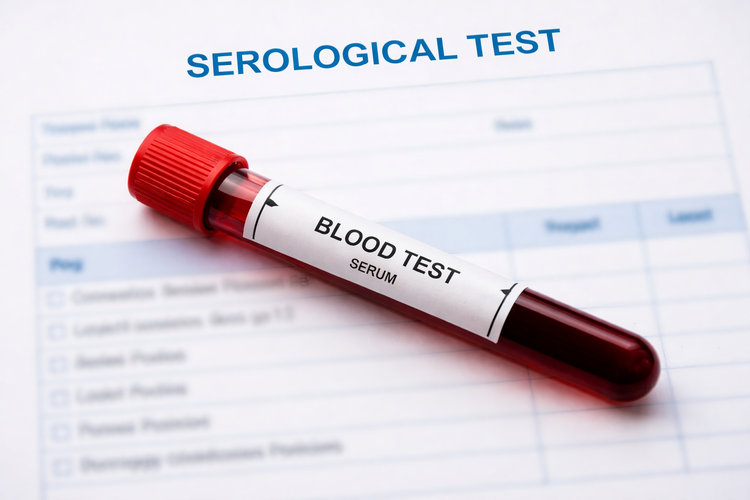
Check your immunity, screen for infections like HIV, hepatitis B, and more.
- From $13.08 NETT with no hidden fees
- Tests for immunity, infections, and autoimmune conditions
- No fasting required; results within a few working days
- Walk-ins welcome across all four clinics

Last updated: Sep 30, 2026
What Is a Serology Test?
A serology test is a blood test that detects antibodies or antigens in your blood to find out whether you have been exposed to a specific infection or have developed immunity to it. Serology tests measure your immune system's response to an infection or vaccination, while tests such as PCR swabs look for the virus or bacterium itself.
Your immune system responds to a virus or bacterium by producing different types of protective proteins called antibodies. A serology test identifies which of these antibodies are in your blood, and the result can show whether an infection is recent or past, or whether you are immune.
Serology testing is useful for a wide range of purposes, from diagnosing active infections to confirming immunity before vaccination.
How Does a Serology Test Work?
A serology test works by analysing a blood sample for specific antibodies or
antigens produced in response to infections. A small blood sample is drawn, typically
from a vein in your arm, and sent to a laboratory for analysis.
The laboratory uses techniques such as enzyme-linked immunosorbent assay (ELISA) or chemiluminescent immunoassay (CLIA) to detect and
measure antibody levels. The two most commonly tested antibody types are:
- IgM antibodies are the first antibodies your immune system produces when it encounters a new infection, usually within the first one to two weeks. Their presence typically indicates a recent or active infection.
- IgG antibodies are produced later and often remain in the bloodstream long-term. Their presence usually indicates a past infection or successful vaccination, meaning you have likely developed immunity.
Some serology tests also detect antigens, which are proteins from the pathogen itself rather than antibodies from your immune system. Hepatitis B surface antigen (HBsAg) testing is a common example.
Types of Serology Tests
Serology tests cover a broad range of infections and conditions. They can be grouped by their purpose: immunity testing, infection screening, and autoimmune detection.
Immunity and Vaccination Serology Tests
These tests check whether you are protected against specific diseases, either through past infection or vaccination. They are commonly required for healthcare employment, pre-employment clearance, premarital screening, and travel.
Examples include:
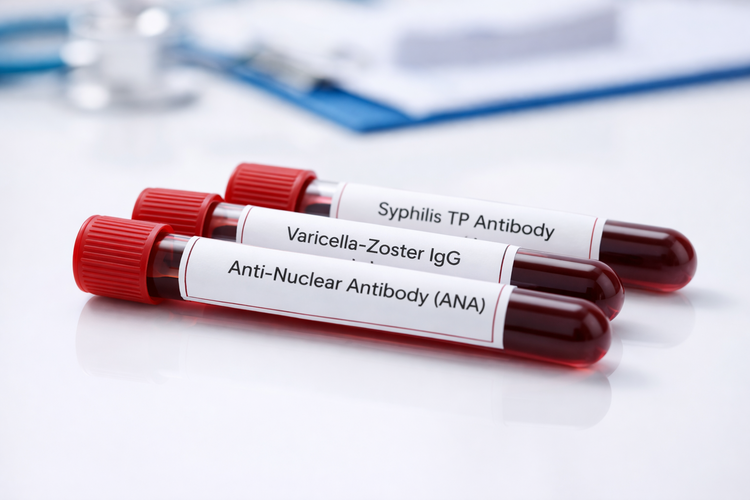
- Varicella-Zoster IgG confirms immunity to chickenpox (caused by the varicella-zoster virus)
- Measles IgG confirms immunity to measles
- Mumps IgG confirms immunity to mumps
- Rubella IgG confirms immunity to rubella (German measles)
- Hepatitis B surface antibody (HBsAb) confirms immunity to hepatitis B
Infection Screening Serology Tests
These tests detect whether you currently have or have previously been infected with a specific pathogen. They are commonly used in STD screening, antenatal care, and general health assessments.
Examples include:
- HIV antigen (Ag) / antibody (Ab) screens for HIV infection by detecting both antigens and antibodies
- Syphilis TP antibody screens for syphilis infection
- Hepatitis B surface antigen (HBsAg) detects active hepatitis B infection
- Herpes Simplex IgG (Type 1 and Type 2) identifies past exposure to herpes simplex virus
- Dengue IgG and IgM help diagnose current or recent dengue infection
- Cytomegalovirus (CMV) IgG and IgM detect past or recent CMV infection
Autoimmune Serology Tests
Autoimmune serology tests detect antibodies that mistakenly target the body's own tissues, which can indicate autoimmune conditions.
Examples include:
- Anti-Nuclear Antibody (ANA) screens for autoimmune conditions such as lupus
- Anti-ds DNA helps confirm a diagnosis of systemic lupus erythematosus (SLE)
- Rheumatoid Factor (RF) supports the evaluation of rheumatoid arthritis
When Is a Serology Test Needed?
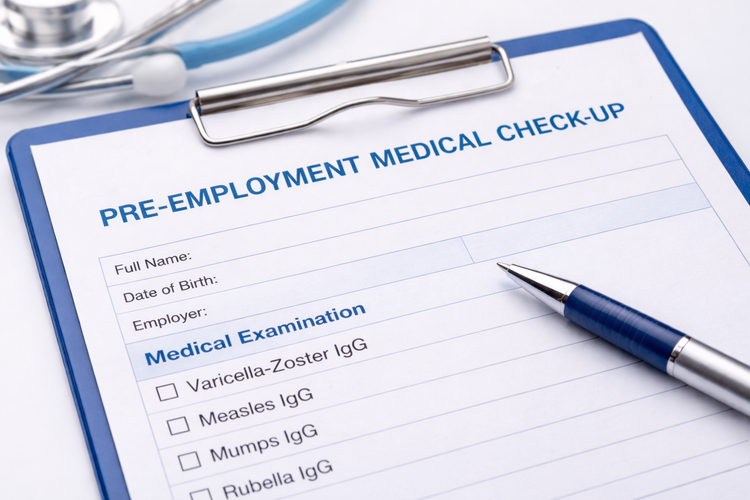
A serology test may be recommended in a number of situations where confirming immunity or detecting an infection through antibody testing is the most appropriate approach.
Pre-Employment and Healthcare Requirements
Many employers in Singapore, particularly in healthcare settings, require proof of immunity to diseases such as measles, mumps, rubella, varicella, and hepatitis B as part of a pre-employment check. A serology test confirms your immunity status and helps determine whether booster vaccinations are needed.
Premarital and Pregnancy Screening
Serology tests form a key part of premarital screening and antenatal care. Tests for rubella immunity, hepatitis B, HIV, and syphilis are routinely included in pregnancy blood panels to help identify risks to both mother and child early.
STD Screening
Blood-based serology tests are a commonly used method for screening infections such as HIV, syphilis, hepatitis B, hepatitis C, and herpes simplex. These can be done as individual tests or as part of a comprehensive STD screening panel.
Confirming Immunity Before Vaccination
If you are unsure whether you have been vaccinated or had a particular disease, a serology test can check your antibody levels before deciding on vaccination. This avoids unnecessary doses and confirms whether boosters are needed.
Diagnosing Active or Past Infections
When symptoms suggest a possible infection, serology tests can help identify the cause. For example, dengue serology can indicate whether an infection is current or past based on the type of antibodies detected, though results may require clinical interpretation in some cases.
Not sure which serology test you need? Our doctors can recommend the right tests based on your situation, whether it is for pre-employment, pregnancy, STD screening, or immunity checks.
Book Your Appointment TodayDo I Need to Fast Before a Serology Test?
No, you do not need to fast before a serology test. Unlike cholesterol or blood glucose tests,
serology tests measure antibodies and antigens that are not affected by food intake. You can eat and
drink normally before your appointment.
The blood draw itself takes only a few minutes. Results are typically available within a few working
days, depending on the specific test.
Understanding Your Serology Test Results
Serology test results are typically reported as reactive (positive) or non-reactive (negative), and some tests also include antibody levels (titres).
| Result | Immunity Tests | Infection Screening Tests | Autoimmune Tests |
|---|---|---|---|
| Reactive (Positive) | Favourable; indicates protection | May indicate an active or past infection; further confirmatory testing is typically needed | May suggest an autoimmune condition; further testing is usually needed to confirm |
| Non-Reactive (Negative) | May not be protected; vaccination may be recommended | Generally means no infection was found. If tested too early after exposure (window period), a repeat test may be advised. | Generally means no autoimmune markers were detected, though symptoms may still warrant further investigation |
Some tests report numerical antibody levels (titres) rather than a simple positive or negative.
Higher titres generally suggest stronger immunity, though for infection screening tests, titres may
reflect disease activity rather than protection.
Your doctor will interpret your results based on the specific test and the antibody levels required
for protection or diagnosis.
Serology Test Prices in Singapore
At ATA Medical, we offer a comprehensive range of serology tests. The following prices apply:
| Test | Price* |
|---|---|
| Consultation | From $49.05 |
| Immunity Testing | |
| Hepatitis Bs Antibody (HBsAb) / Antigen (HBsAg) | $13.08 |
| Measles IgG Antibody | $100.28 |
| Mumps IgG Antibody | $144.97 |
| Rubella IgG Antibody | $28.34 |
| Varicella-Zoster IgG Antibody | $49.05 |
| Infection Screening | |
| Cytomegalovirus (CMV) IgG Antibody | $80.66 |
| Cytomegalovirus (CMV) IgM Antibody | $80.66 |
| H. pylori IgG Antibody | $38.15 |
| Hepatitis A IgG Antibody | $43.60 |
| Hepatitis A IgM Antibody | $38.15 |
| Hepatitis B Core Total Antibody / IgM Antibody | $43.60 |
| Hepatitis Be Antibody (HBeAb) / Antigen (HBeAg) | $43.60 |
| Hepatitis C Antibody | $44.69 |
| Herpes Simplex IgG Antibody (Type 1 or 2) | $41.42 |
| Herpes Zoster | $49.05 |
| HIV Antigen (Ag) / Antibody (Ab) Screen | $21.80 |
| Syphilis TP Antibody | $21.80 |
|
Antenatal Profile 1 Full Blood Count, Hb Electrophoresis, ABO Blood Group, Hepatitis Bs Antigen (HBsAg), Hepatitis Bs Antibody (HBsAb), Rubella IgG Antibody, Glucose, HIV Ag/Ab Screen, VD (Syphilis TP Ab), RPR & TPPA (if Syphilis is reactive) |
$94.83 |
|
Dengue Duo Kit (Rapid Test)
NS1 Antigen, IgG & IgM Antibodies |
$59.95 |
|
Dengue Profile 1 Full Blood Count, ESR, NS1 Antigen, IgG & IgM Antibodies |
$87.20 |
|
Dengue Profile 2 NS1 Antigen, IgG & IgM Antibodies |
$76.30 |
|
Dengue Profile 3 Full Blood Count, ESR, NS1 Antigen, IgG & IgM Antibodies |
$82.84 |
|
Hepatitis Profile 1 Hepatitis Bs Antigen (HBsAg), Hepatitis Bs Antibody (HBsAb) |
$21.80 |
|
Hepatitis Profile 5 Hepatitis Bs Antigen (HBsAg), Hepatitis Bs Antibody (HBsAb), Hepatitis Be Antigen (HBeAg), Hepatitis Be Antibody (HBeAb), Alpha Fetoprotein (AFP), ALT/SGPT, AST/SGOT, Gamma GT (GGT) |
$87.20 |
|
Hepatitis B, C & HIV Profile (Pre-Operative Testing) Hepatitis Bs Antigen (HBsAg), Hepatitis Bs Antibody (HBsAb), Anti-HCV Antibody, HIV Ag/Ab Screen |
$76.30 |
|
Liver Function Test C
Total Bilirubin, Alkaline Phosphatase (ALP), ALT/SGOT, AST/SGPT, Gamma GT, Total Protein, Albumin, Globulin, A/G Ratio, LDH, Hepatitis Bs Antigen & Antibody, Hepatitis A Total IgG, Alpha Fetoprotein (AFP) |
$91.56 |
| Autoimmune Testing | |
| Anti-Nuclear Antibody (ANA) Test | $65.40 |
|
Auto Immune Profile 1 ESR, Anti-ds DNA, Anti-Nuclear Antibody |
$85.02 |
|
Auto Immune / Lupus Profile 2 C3 Complement, C4 Complement, Anti-ds DNA, Anti-Nuclear Antibody |
$136.25 |
|
Auto Immune / Lupus Profile 3 Full Blood Count, ESR, Albumin, Urea (BUN), Creatine, C3 Complement, C4 Complement, Rheumatoid Factor, Anti-ds DNA, Anti-Nuclear Antibody, Urine FEME |
$163.50 |
^Prices last updated on Apr 02, 2026. While every effort is made to keep pricing information up to date, please contact our team to confirm the latest rates.
For a full list of available tests, visit our blood test
page.
If you are looking for STD-related serology, our STD test
page includes bundled screening packages. You may also wish to consult our women's health
doctor or men's
health doctor if you have specific concerns.
Get Serology Tests Near Me
ATA Medical @ Tanjong Pagar
Sat: 8:30 AM – 12:30 PM
Sun & PH: Closed
Last appt: 5:15 PM (Mon–Fri), 12:15 PM (Sat)
ATA Medical @ Orchard
Sat: 8:30 AM – 12:30 PM
Sun & PH: Closed
Last appt: 5:15 PM (Mon–Fri), 12:15 PM (Sat)
ATA Medical @ Jurong
Sat: 8:30 AM – 12:30 PM
Sun & PH: Closed
Last appt: 5:15 PM (Mon–Fri), 12:15 PM (Sat)
ATA Medical @ Novena
Sat: 8:30 AM – 12:30 PM
Sun & PH: Closed
Last appt: 5:15 PM (Mon–Fri), 12:15 PM (Sat)