

Home Sleep Test | Belun Ring® Sleep Study
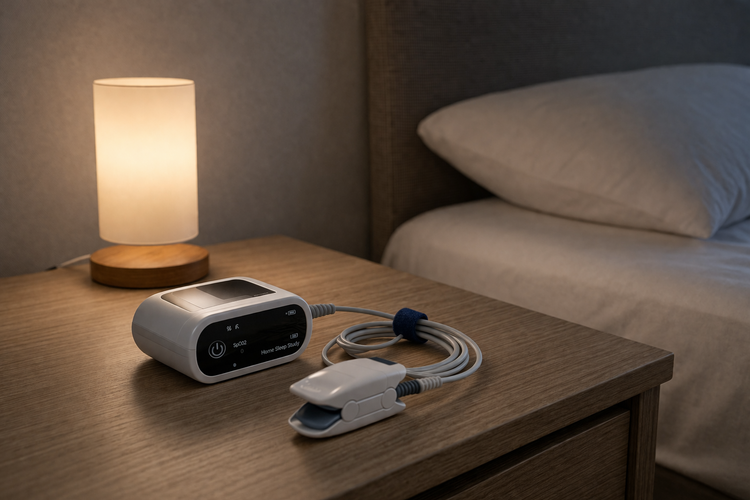
Home Sleep Apnoea Testing With the Belun Ring
- At $300 NETT, inclusive of GST
- Simple, comfortable ring-worn device that records sleep apnoea data overnight
- Results reviewed by our doctors with personalised next steps

Last updated: Sep 25, 2026
What Is a Home Sleep Test?
A home sleep test is a portable diagnostic tool that monitors your breathing, oxygen levels and other sleep-related measurements overnight in your own bed. It is also known as a home sleep apnoea test (HSAT) and is mainly used to detect obstructive sleep apnoea (OSA). OSA is a condition in which the airway repeatedly collapses during sleep, causing pauses in breathing.
A home sleep test uses a small, wearable device that you set up yourself, so you can sleep in familiar surroundings. An in-lab sleep study (polysomnography), by contrast, requires an overnight stay in a sleep laboratory. The home device records enough data for a doctor to determine whether you have sleep apnoea and how severe it may be.
In Singapore, home sleep testing has become an increasingly common first-line diagnostic option. It is used particularly for adults with a moderate to high likelihood of OSA, based on symptoms such as loud snoring, witnessed pauses in breathing and excessive daytime sleepiness.
What Does a Home Sleep Test Measure?
A home sleep test measures breathing patterns, blood oxygen levels, airflow, and respiratory effort to identify disruptions during sleep. The specific data points depend on the device used, but most home sleep test kits monitor the following:
| Measurement | What It Tells Your Doctor |
|---|---|
| Airflow | The rate and continuity of breathing, identifying pauses (apnoeas) and partial blockages (hypopnoeas). |
| Blood oxygen saturation (SpO2) | Oxygen levels tracked continuously overnight. Repeated drops are a hallmark of sleep apnoea. |
| Respiratory effort | The physical effort of breathing, helping distinguish obstructive events (breathing against a closed airway) from central events (where breathing effort itself stops). |
| Heart rate | Pulse patterns recorded alongside oxygen levels that can reveal sleep-disordered breathing. |
| Body position | Whether you sleep on your back, side, or stomach, since sleep apnoea is often worse in the supine (face-up) position. Devices with a built-in accelerometer can record this automatically. |
| Snoring intensity | Snoring patterns and volume, captured by a built-in microphone or vibration sensor, which can correlate with airway obstruction. |
Not all devices measure every parameter listed above. Traditional multi-sensor devices may include nasal breathing sensors, chest belts, and finger oximeters, while newer ring-based or wrist-worn devices focus on oxygen saturation, heart rate, and movement, using clinical-grade sensors and algorithms to derive respiratory event data with fewer points of contact.
Are Home Sleep Tests Accurate?
Home sleep tests are widely considered accurate for detecting moderate to severe OSA in
adults whose symptoms and risk factors strongly suggest the condition.
Multiple studies have shown that home sleep test results closely match those of in-lab polysomnography when
the patient's symptoms and risk profile already point towards sleep apnoea.
However, there are important caveats:
- Mild Sleep Apnoea May Be Missed – Some home sleep test devices cannot tell whether you are asleep or awake, which can reduce precision. Even devices that estimate sleep stages are less reliable at detecting mild OSA.
- Central Sleep Apnoea Is Not Reliably Detected – Central sleep apnoea, where the brain temporarily stops sending signals to breathe, and other non-obstructive sleep disorders are not reliably detected by home sleep testing devices.
- Accuracy Depends on Sensor Placement – Home sleep test accuracy depends on the sensors staying in place overnight. If a sensor shifts or detaches, the recording may be incomplete and a repeat sleep test may be needed.
- Other Health Conditions Can Affect Results – Conditions such as chronic obstructive pulmonary disease (COPD) or neuromuscular disorders can affect how sleep test results are interpreted, making a full in-lab sleep study more appropriate.
Who Should Get a Home Sleep Test?
A home sleep test is most appropriate for adults who have symptoms strongly suggestive of obstructive sleep apnoea and no significant coexisting conditions that would require a full sleep laboratory study. You may be suitable if you:
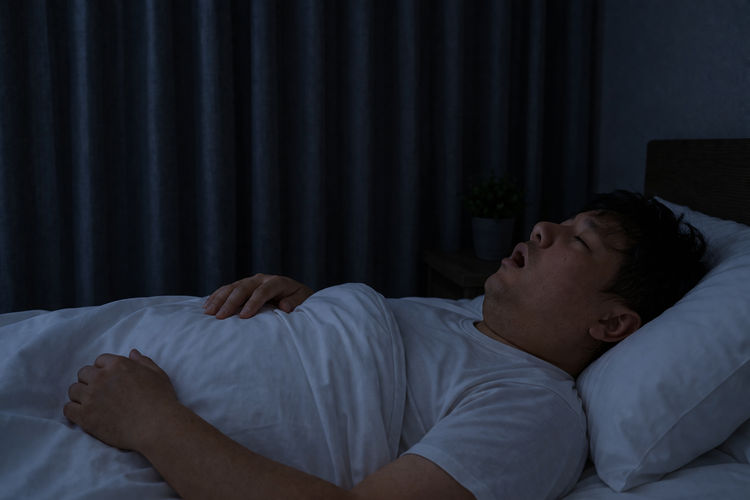
- Have been observed gasping or stopping breathing during sleep
- Snore loudly and regularly
- Experience excessive daytime sleepiness despite a full night's sleep
- Have high blood pressure that is difficult to control, which can be linked to untreated sleep apnoea
- Have risk factors such as obesity, a large neck circumference, or a family history of sleep apnoea
A home sleep test is generally not recommended if you:
- Are suspected of having central sleep apnoea or another sleep disorder (e.g., narcolepsy, insomnia, restless legs syndrome)
- Have significant heart or lung conditions that could complicate interpretation
In these situations, an in-lab polysomnography provides more comprehensive data for accurate diagnosis.
Think you might have sleep apnoea? Book a consultation with our doctors for a risk assessment and to find out if a home sleep test is right for you.
Book Your Appointment TodayBelun Ring Sleep Study at ATA Medical
At ATA Medical, we use the Belun Ring for home sleep testing. The Belun Ring is a medical-grade finger ring that monitors for obstructive sleep apnoea without the discomfort of traditional multi-sensor devices.
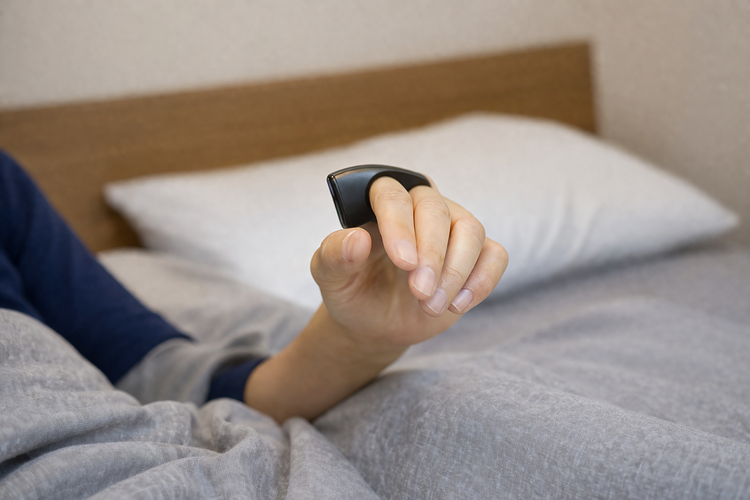
The ring is worn on the finger like a regular ring and records data overnight using clinical-grade
photoplethysmography (PPG) sensors, which use light signals to measure blood oxygen
levels and pulse through the skin.
The Belun Ring captures blood oxygen saturation (SpO2), heart rate, and heart rate
variability, providing pulse signal data and patterns that correlate with sleep-disordered
breathing. A built-in accelerometer also records movement and body position to track motion
and sleep restlessness.
Using validated algorithms, the Belun Ring derives the oxygen desaturation index (ODI) and estimates the apnoea-hypopnoea index (AHI) from these measurements, providing sufficient data to screen for moderate to severe obstructive sleep apnoea.
The Belun Ring Sleep Study Procedure
Consultation
Your symptoms, medical history, and risk factors are reviewed using screening tools such as the STOP-BANG questionnaire or Epworth Sleepiness Scale.
Device Fitting
You collect the Belun Ring at the clinic and it is fitted to your finger to ensure a secure, comfortable fit across all three nights.
Three-Night Recording
Wear the ring to bed for three consecutive nights and sleep as normal. The device records data automatically each night, with no nasal breathing sensors, chest belts, or wires.
Results & Review
Return the ring after the third night. Our doctor will review your results and recommend next steps with you once the data has been analysed.
Why a Ring-Based Sleep Test?
A ring-based home sleep test like the Belun Ring removes much of the discomfort associated with traditional sleep apnoea testing devices.
More Comfortable Than Traditional Devices
No nasal breathing sensors, chest straps, or wires that can disrupt sleep quality and affect sleep study accuracy.
Simple Setup
A single finger-worn device that requires no complex assembly or calibration before bed.
Less Sleep Disruption
A less intrusive home sleep test experience that is more likely to capture a representative night's sleep.
Suitable for First-Time Users
Particularly practical if you are new to home sleep testing or have had difficulty with conventional sleep apnoea devices.
A home sleep test is not a replacement for in-lab polysomnography in all cases. If your sleep test results are inconclusive or a more comprehensive evaluation is needed, a referral for a full sleep study can be arranged.
How to Prepare for a Home Sleep Test
Preparing for a home sleep test involves following a few straightforward steps to ensure the device captures reliable data. Good preparation reduces the chance of needing a repeat test.
- Avoid alcohol and sedatives on each night of the test. These substances can alter your breathing patterns and affect the accuracy of results.
- Review the device instructions carefully before setting up. If you are unsure about any step, contact our clinic for guidance rather than guessing.
- Follow your normal routine. Sleep at your usual time and in your usual bed. The goal is to capture a typical night's sleep.
- Avoid caffeine in the afternoon and evening before the test, as it may make it harder to fall asleep.
- Do not nap during the day of the test, so you are more likely to fall asleep at your regular bedtime.
Understanding Your Home Sleep Test Results
Your Belun Ring sleep test results are summarised using the estimated apnoea-hypopnoea index
(AHI), which counts the number of breathing disruptions per hour.
The Belun Ring derives this estimate from oxygen saturation and pulse signal data (heart rate and
heart rate variability) using validated algorithms. This number determines whether you have sleep
apnoea and how severe it is.
| Severity | AHI (events per hour) |
|---|---|
| Normal | Fewer than 5 |
| Mild | 5 to 14 |
| Moderate | 15 to 29 |
| Severe | 30 or more |
Your report may also include:
- Oxygen desaturation index (ODI) — The number of times per hour your blood oxygen drops by 3% or more. A high ODI supports a diagnosis of sleep apnoea.
- Minimum oxygen saturation — The lowest oxygen level recorded during the night. Values below 90% may indicate a concern that warrants further evaluation.
- Estimated sleep time — Derived from movement and pulse signal data captured by the ring.
- Body position data — Whether breathing disruptions were more frequent in certain sleeping positions, such as on your back versus your side.
These results are interpreted alongside your symptoms and clinical history.
Home Sleep Test Cost in Singapore
At ATA Medical, we offer the Belun Ring sleep study for home sleep testing, with pricing as follows:
| Test | Price*^ |
|---|---|
| Consultation with our GP / Family Physician | $49.05 |
| Belun Ring Sleep Study | From $300 |
^Prices last updated on Apr 15, 2026. While every effort is made to keep pricing information up to date, please contact our team to confirm the latest rates.
Some Integrated Shield Plans and private insurance policies cover sleep studies. It is best to check directly with your insurer before proceeding.
"The Belun Ring makes sleep apnoea testing far more accessible. You simply wear a ring
to bed rather than managing multiple sensors and wires, which often leads to a more
natural night's sleep and more reliable data to guide treatment."
— Dr Leonard Leng
"The Belun Ring makes sleep apnoea testing far more accessible. You simply wear a ring to bed rather than managing multiple sensors and wires, which often leads to a more natural night's sleep and more reliable data to guide treatment."
— Dr Leonard Leng
Book a Consultation for a Home Sleep Test
ATA Medical @ Orchard
Sat: 8:30 AM – 12:30 PM
Sun & PH: Closed
Last appt: 5:15 PM (Mon–Fri), 12:15 PM (Sat)