

How to Make Period Come Faster: Causes, Myths & Options

Last updated: Oct 1, 2026
Searching for ways to make your period come faster? You are not alone. Whether your period
is late and a holiday is coming up, you are dealing with an unpredictable cycle, or you
simply want clarity about when it will start, it is a common concern.
The internet is full of home remedies claiming to bring on your period overnight, from
ginger tea to high doses of vitamin C. But do any of them actually work? In this article, we
separate fact from fiction and explain what may realistically help when your period is late.
Can You Actually Make Your Period Come Faster?
No proven natural method can reliably force your period to start on demand. If you
have searched for ways to make your period come faster, you have likely come across suggestions
involving specific foods, teas, exercises, or home remedies. While these are widely shared online,
none are backed by scientific evidence.
Your menstrual cycle is regulated by a coordinated sequence of hormonal signals between the brain
and ovaries. Ovulation must occur before menstruation can follow, and this process cannot be
meaningfully accelerated by external remedies. Understanding why your period is late is often more
useful than trying to force it to arrive.
Stages of the Menstrual Cycle
The menstrual cycle is a monthly hormonal process that prepares the body for pregnancy, typically
lasting 21 to 35 days. It is driven by four key hormones: oestrogen, progesterone,
follicle-stimulating hormone (FSH), and luteinising hormone (LH).
Each stage must complete in sequence before menstruation can occur:
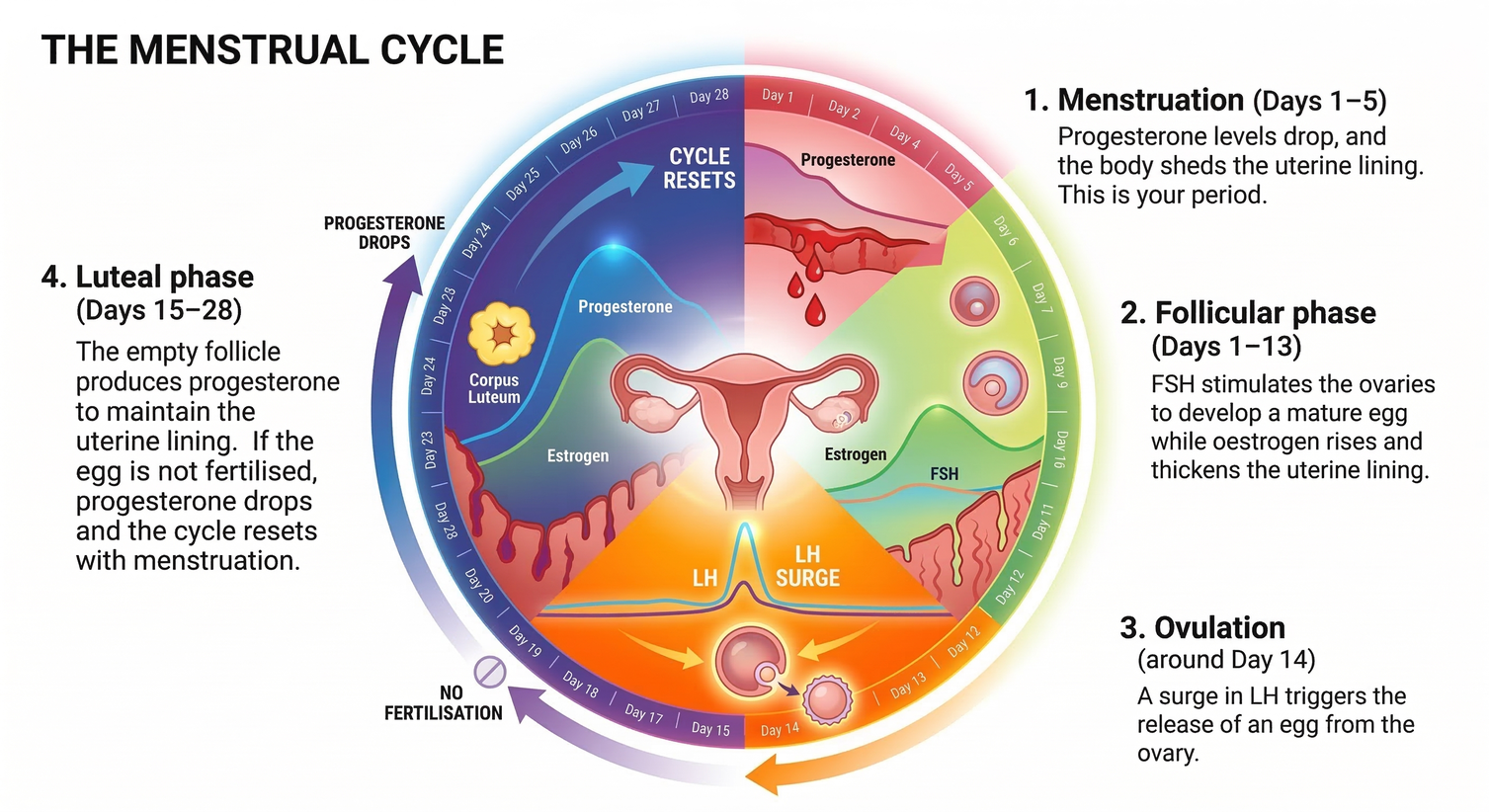
Because of this hormonal sequence, it is not possible to skip directly to your period. Menstruation begins only after ovulation has occurred and progesterone levels decline.
Why Your Period May Be Late
A late or irregular period is most commonly caused by a delay in ovulation rather than a problem with menstruation itself. Several factors can disrupt your hormonal balance and push back your cycle:
- Pregnancy – The most common cause of a missed period in sexually active individuals, as hormonal changes during early pregnancy stop the menstrual cycle.
- Stress – Elevated cortisol levels can interfere with reproductive hormones that regulate ovulation, sometimes delaying menstruation by several days or longer.
- Recent use of hormonal contraceptives – Starting, stopping, or switching birth control pills can cause temporary cycle irregularities while your body adjusts.
- Sudden weight changes – Rapid weight gain or weight loss can affect oestrogen production and disrupt the timing of ovulation.
- Intense exercise – Very high levels of physical activity, particularly when combined with inadequate energy intake, can suppress reproductive hormones and disrupt ovulation.
- Underlying conditions – Hormonal conditions such as polycystic ovary syndrome (PCOS) or thyroid disorders can cause persistently irregular or absent periods. In women under 40, premature ovarian insufficiency (POI), where the ovaries stop working normally, can also cause absent periods.
A delay of up to 7 days can still fall within the normal range of menstrual cycle variation. However, medical evaluation may be advisable if periods are repeatedly late, significantly irregular, or absent for three months or longer.
Common Myths About Making Your Period Come Faster
Many home remedies circulate online claiming to induce menstruation. None of these have been proven to work in clinical studies, and relying on them can delay you from seeking proper medical advice.
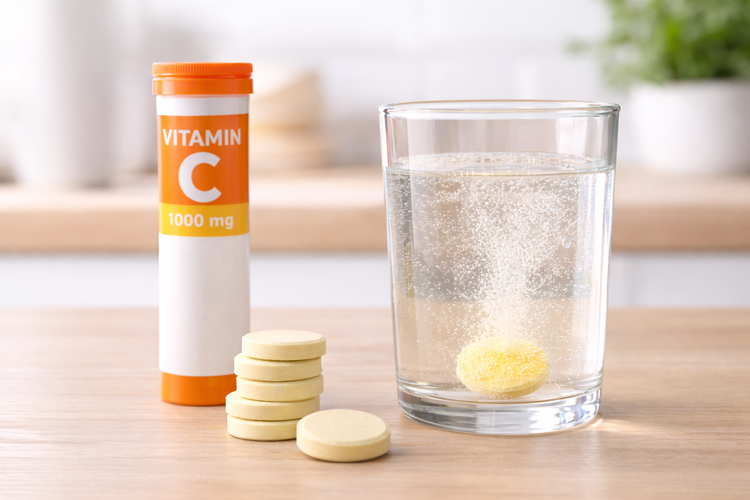
Vitamin C Megadoses
Vitamin C is often claimed to trigger menstruation by influencing hormone levels or causing
the uterine lining to shed. However, there is no clinical evidence that high doses of
vitamin C can induce a period. Taking excessive amounts may instead cause side effects such
as stomach upset, diarrhoea, or abdominal discomfort without affecting the menstrual cycle.
That said, vitamin C plays an important role in immune function, skin health, and iron
absorption when consumed in appropriate dietary amounts.
Ginger Tea
Ginger tea is sometimes suggested as a natural remedy to bring on menstruation, but there is no
reliable human evidence that it can induce a period or alter the timing of the menstrual cycle.
Ginger may still provide other benefits, such as helping reduce nausea, supporting digestion, and
potentially easing menstrual cramps for some individuals.
Turmeric
Turmeric is sometimes claimed to influence oestrogen and progesterone levels and help regulate
menstruation. However, there is no clinical evidence that consuming turmeric can trigger
menstruation or make your period start sooner.
When used in normal dietary amounts, turmeric may still offer other benefits. Its active compound,
curcumin, has anti-inflammatory and antioxidant properties and may help reduce period pain and some premenstrual
symptoms.

Pineapple and Papaya
Pineapple and papaya are frequently mentioned in online discussions about inducing
menstruation. These fruits contain enzymes such as bromelain and papain that are sometimes
believed to affect the uterine lining. However, scientific studies have not shown that
eating these fruits can cause a period to start earlier.
Despite this, both fruits are nutritious and provide vitamins, fibre, and digestive enzymes
that can support general digestive health.
Parsley Tea
Parsley tea has historically been described as an
"emmenagogue," a substance believed to stimulate menstrual flow. Compounds in parsley, such as apiol
and myristicin, have been associated with uterine stimulation in laboratory settings. However, there
is no reliable evidence in humans that parsley tea can safely or effectively induce a period.
In normal culinary amounts, parsley is a nutritious herb that provides vitamins such as vitamin K
and vitamin C. However, concentrated parsley oil can be toxic if consumed in large amounts.
Hot Baths and Heat Packs
Hot baths and heat packs are sometimes recommended to encourage menstruation by increasing blood flow to the pelvic area. While warmth may help relieve menstrual cramps or muscle tension once a period begins, there is no evidence that heat can trigger menstruation or alter the timing of your cycle.
Concerned about a late or missed period? Book a consultation with our women's health doctors to find out what may be causing it and discuss your options.
Book Your Appointment TodayWhat to Do If Your Period Is Late
If your period is late, a few simple steps can help determine the cause before considering medical treatment.
- Check for pregnancy – If you are sexually active, taking a home pregnancy test is usually the first step. Pregnancy is the most common cause of a missed period.
- Give your cycle some time – A delay of a few days can occur due to stress, travel, illness, or hormonal fluctuations. Occasional variation of up to 7 days is generally considered normal.
- Monitor your cycle – Tracking your periods over a few months can help identify patterns of irregularity and provide useful information during medical evaluation.
When to See a Doctor About a Late Period
An occasional late period is usually not a cause for concern. However, medical evaluation may be advisable if:
- Your period has been absent for three consecutive months or longer (amenorrhoea).
- You experience sudden or unexplained changes in your usual menstrual cycle pattern.
- Late periods occur together with other symptoms such as excessive hair growth, significant weight changes, or pelvic pain.
- You have been trying to conceive and your cycles are irregular.
- Pregnancy has been ruled out but menstruation has not resumed.
Evaluation focuses on identifying underlying conditions affecting your menstrual cycle and may include hormone tests, pelvic ultrasound imaging if needed, and other tests depending on the findings.
Medical Options to Induce Your Period
Medical options are the most reliable way to induce a period and include hormonal
medications that cause shedding of the uterine lining by altering hormone levels. These treatments
may be considered if your period is significantly late and pregnancy has been ruled out.
These medications can induce a delayed period, but they do not speed up a normal menstrual
cycle or make your period come earlier than your body's hormonal cycle allows.
| Approach | What it does | When it is typically used |
|---|---|---|
| Progesterone therapy | Temporarily increases progesterone levels. Medications such as norethisterone (period delay pills) maintain progesterone while taken. When stopped, progesterone levels drop and trigger shedding of the uterine lining. | Used to induce a period when ovulation is irregular or absent, such as in polycystic ovary syndrome (PCOS). |
| Hormonal contraceptives | Provide steady levels of oestrogen and progesterone that regulate the menstrual cycle, with withdrawal bleeding during pill-free days. | Used to regulate menstrual cycles over time rather than to trigger a single delayed period. |
Cost of Tests and Treatment for Late or Irregular Periods
At ATA Medical, we provide consultations for late or irregular periods and offer diagnostic testing and treatment if required. Female doctors are available based on your preference.
A period that has stopped for three months or longer (amenorrhoea) can be assessed by our doctors, usually with hormone blood tests. Where premature ovarian insufficiency (POI) is confirmed, a specialist referral can be arranged for ongoing hormone replacement therapy (HRT).
Our prices are as follows:
| Test / Treatment | Price* |
|---|---|
| Consultation | $49.05 |
| Tests | |
| Pregnancy Urine Test | $13.08 |
| Pregnancy Blood Test (beta hCG Test) | $38.15 |
| Estradiol / Oestrogen (E2) | $32.70 |
| Progesterone | $32.70 |
| Free T3 (FT3) | $43.60 |
| Free T4 (FT4) | $32.70 |
| Thyroid Stimulating Hormone (TSH) | $32.70 |
|
Hormone & Fertility Profile (HOR3) Testosterone, Oestrogen (E2), Free T4, TSH, FSH, LH, Prolactin |
$130.90 |
|
Hormonal Study Dehydroepiandrosterone Sulfate (DHEAS), Insulin-like Growth Factor 1 (IGF-1), Sex Hormone Binding Globulin (SHBG), FSH, LH, E2 |
$196.20 |
| Ultrasound Pelvis | $272.50 |
| Treatment | |
| Birth Control Pill | $43.60 (per box of 40 tablets) |
| Period Delay Pill (Norethisterone 5 mg) | $0.76 per tab |
^Prices last updated on Aug 27, 2026. While every effort is made to keep pricing information up to date, please contact our team to confirm the latest rates.
"A late period can feel stressful, but it is often due to temporary hormonal changes related
to stress, lifestyle, or conditions like PCOS. A consultation and simple blood tests can
help identify the cause and guide treatment."
— Dr Jana Lim
Where to Seek Treatment for Late or Irregular Periods in Singapore
ATA Medical @ Tanjong Pagar
Sat: 8:30 AM – 12:30 PM
Sun & PH: Closed
Last appt: 5:15 PM (Mon–Fri), 12:15 PM (Sat)
ATA Medical @ Orchard
Sat: 8:30 AM – 12:30 PM
Sun & PH: Closed
Last appt: 5:15 PM (Mon–Fri), 12:15 PM (Sat)
ATA Medical @ Jurong
Sat: 8:30 AM – 12:30 PM
Sun & PH: Closed
Last appt: 5:15 PM (Mon–Fri), 12:15 PM (Sat)
ATA Medical @ Novena
Sat: 8:30 AM – 12:30 PM
Sun & PH: Closed
Last appt: 5:15 PM (Mon–Fri), 12:15 PM (Sat)