

Audiometric Test Singapore: Requirements for Noise-Exposed Workers
Audiometric Testing for Noise-Exposed Workers, MOM-Compliant
- Statutory pre-placement & annual hearing tests
- MOM-registered Designated Workplace Doctors
- No consultation fee for statutory testing
- Corporate testing arranged for your whole workforce

Last updated: Sep 27, 2026
What Is an Audiometric Test?
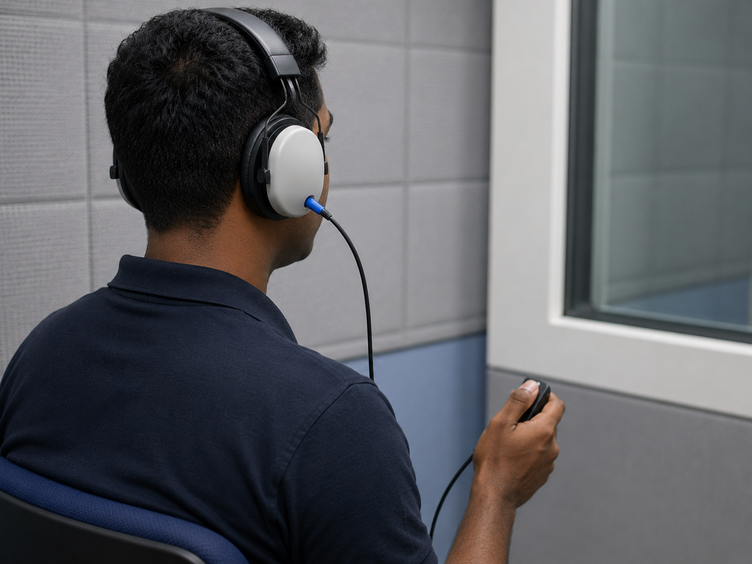
An audiometric test is a hearing assessment that measures the softest sounds you can hear across a range of pitches. It is also called an audiometric examination, and the results are plotted on a chart called an audiogram. The standard method is pure-tone audiometry, in which you wear headphones in a quiet room and press a button or raise your hand each time you hear a tone.
In workplace safety, an audiometric test usually means the statutory hearing test that the Ministry of Manpower (MOM) requires for employees in noisy environments. It is the same test as a general hearing check, carried out under specific regulatory conditions to detect noise-induced hearing loss early.
At ATA Medical, we offer statutory audiometric testing for noise-exposed workers, along with Designated Workplace Doctors and a range of corporate health services.
Who Needs an Audiometric Test in Singapore?
Under the Workplace Safety and Health (Medical Examinations) Regulations, every employee exposed to excessive noise at work must undergo audiometric examinations arranged and paid for by their employer.
A person is considered exposed to excessive noise if, without hearing protectors, they experience:
- Noise above the permissible exposure limit, equivalent to 85 dB(A) averaged over an 8-hour workday, or
- Peak sound pressure levels exceeding 140 dB(C), such as from impact tools or sudden loud bursts
Workers in these industries commonly require statutory audiometric testing:
- Construction and civil engineering
- Manufacturing and metalworking
- Shipyards and marine engineering
- Aviation and ground handling
- Printing, woodworking, and food production lines
Outside of statutory requirements, anyone who notices hearing changes can take the same test as part of a general health assessment, and should see a doctor if the changes persist.
MOM Audiometric Test Requirements
MOM requires noise-exposed workers to be tested before starting work and yearly thereafter, with the results reviewed under the supervision of a Designated Workplace Doctor (DWD), a doctor registered with MOM to conduct statutory medical examinations.
Pre-Placement Audiometric Examination
A new employee who will be exposed to excessive noise must be examined and certified fit for the role before starting work or within 3 months of commencement.
This baseline audiogram records the worker's hearing at the point of entry, so any future decline can be detected and acted on early.
Annual Audiometric Examination
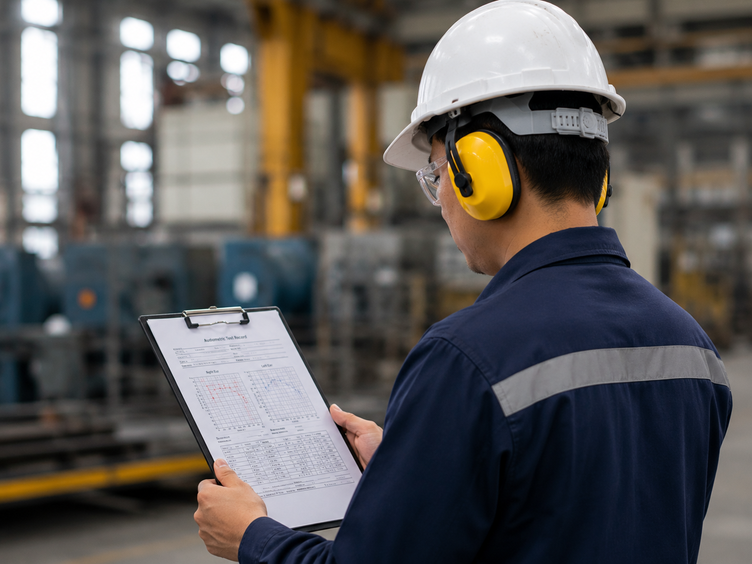
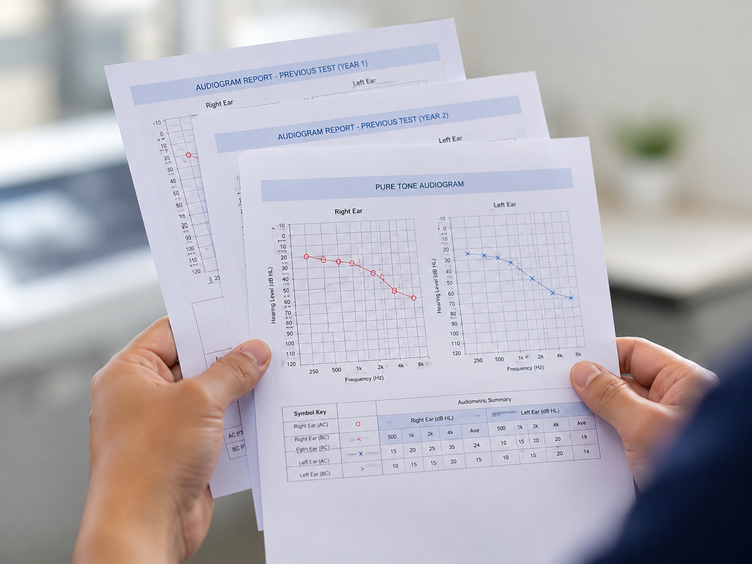
After the baseline test, workers exposed to excessive noise must undergo an audiometric examination every year. Comparing each new audiogram against the baseline allows the DWD to identify early threshold shifts (small drops in hearing sensitivity) before they progress to noticeable hearing loss.
Employer Responsibilities
Employers carry several duties beyond arranging the tests themselves:
- Cover the cost – All statutory examinations are arranged at the employer's expense, with paid leave granted for the worker to attend.
- Keep a register – Employers must keep an up-to-date register of all persons employed in the noise-exposed occupation, covering everyone employed in that role within the last 5 years.
- Ensure reporting to MOM – After each round of examinations, the DWD submits a Summary Report of Examinations, together with any abnormal audiogram results, to MOM.
- Follow up on results – Employers must support follow-up where a worker's results are abnormal, including review and any change to noise exposure advised by the DWD.
Need an MOM-compliant audiometric test for yourself or your workers? Book an appointment with our DWDs at our Jurong clinic today.
Contact Us TodayWhat Happens During a Statutory Audiometric Examination?
A statutory audiometric examination is a short, non-invasive test conducted by a trained audiometric technician using a calibrated audiometer in a sound-controlled environment. The process typically involves:
-
1
Pre-Test Screening
The technician confirms the required quiet period has been met and checks noise-exposure history, the use and type of hearing protection, and any recent cold, sore throat, or ear symptoms that could affect results. -
2
Pure-Tone Audiometry (Air Conduction)
Tones are played through headphones at different frequencies and intensities in each ear, with a response given each time one is heard. The test itself takes about 3 to 5 minutes. -
3
Further Testing If Needed
If results show a hearing threshold above 30 dB, bone conduction testing and an ear examination are performed to determine whether the change comes from the outer or middle ear or the inner ear. -
4
Review and Certification
The results are reviewed under DWD supervision, and a Certificate of Fitness is issued where the result confirms fitness for continued noise exposure.
For statutory testing, a doctor's consultation is not required, which keeps each visit short whether a worker attends individually or as part of a company group.
How to Prepare for an Audiometric Test?
The one requirement to meet before the test is a quiet period of at least 16 hours away from loud noise, meaning no exposure to loud sound without hearing protection.
Recent noise exposure can cause a temporary threshold shift (a short-term dip in hearing) that makes results look worse than true hearing levels.
A few tips can help the visit go smoothly:
- Schedule tests at the start of a shift, or after a rest day, so workers meet the quiet period without disrupting operations.
- Avoid loud recreational noise the evening before, such as loud music through earphones.
- Tell us about any cold, sore throat, earache, or ear infection, as these can affect results and the test may need to be rescheduled.
- Bring or forward any previous audiogram results when changing clinics, so new results can be compared against the baseline.
What Happens If a Worker Fails an Audiometric Test?
If there is an abnormal audiometric result, further checks such as bone conduction testing and an ear examination are usually conducted to rule out temporary or treatable causes like ear wax, fluid, or infection.
If the DWD finds a significant or worsening hearing loss, the possible outcomes include:
- Repeat testing – A follow-up test after a proper quiet period, to exclude temporary threshold shifts.
- Closer monitoring – More frequent audiometric examinations and reinforcement of correct hearing protector use.
- Certificate of Suspension – Where hearing has deteriorated significantly, the DWD may certify that the worker should not work in the noisy environment for a period of time.
Noise-induced hearing loss (formerly noise-induced deafness) is a notifiable occupational disease. A suspected case must be reported to MOM by both the employer and the diagnosing doctor, via an iReport under the WSH (Incident Reporting) Regulations, within 10 days of a written diagnosis.
Detecting it early matters because the hearing loss is permanent. The sooner a threshold shift is found, the more hearing can be preserved through better protection or reduced exposure.
Hearing Conservation Programmes for Employers
Audiometric testing is one part of a wider Hearing Conservation Programme (HCP) that MOM expects workplaces with noise hazards to implement.
Under the WSH (Noise) Regulations, workplaces with 10 or more persons exposed to excessive noise must conduct noise monitoring at least once every 3 years, and the programme as a whole covers:
- Noise monitoring – Measuring noise levels by a competent person to identify at-risk workers and areas.
- Noise control – Engineering and administrative measures to reduce noise at the source.
- Hearing protection – Providing suitable earplugs or earmuffs, fitted and maintained properly.
- Training and education – Annual training for noise-exposed workers, and within 3 months for new employees.
- Audiometric examinations – Baseline and annual hearing tests for noise-exposed workers.
- Record keeping – Retaining monitoring, training, and examination records for audit.
Meet Our Certified Designated Workplace Doctors

Dr. Leonard Leng graduated with a Bachelor in Medicine and Surgery (MBBS) degree
from the National University of Singapore (NUS). He then obtained his Graduate
Diploma in Family Medicine and Master of Medicine in Family Medicine from NUS.
Read More

Dr. Jeremy Wee
Family Physician
Designated Workplace Doctor (DWD)
Special interests:
Preventive Care
Chronic Disease Management
Dr. Jeremy Wee graduated with a Bachelor of Medicine and Bachelor of Surgery (MBBS)
in Singapore and has experience working in both hospital and primary care clinic
settings. He also serves as a Designated Workplace Doctor, with experience in
occupational and workplace health.
Read More
Invest in a Healthier Workforce Today
In today’s dynamic work environment, occupational health is crucial for ensuring the safety
and well-being of employees while directly boosting overall business
performance. ATA Medical’s comprehensive services are designed to keep your workforce
healthy, safe, and compliant with Singapore’s Workplace Safety and Health (WSH) regulations.
Reach out to us today to see how we
can partner with you to create a healthier, safer workplace.
How Do I Book an Audiometric Test Appointment?
ATA Medical @ Jurong
Sat: 8:30 AM – 12:30 PM
Sun & PH: Closed
Last appt: 5:15 PM (Mon–Fri), 12:15 PM (Sat)