

Nightingale Health Check: Metabolic Screening Test
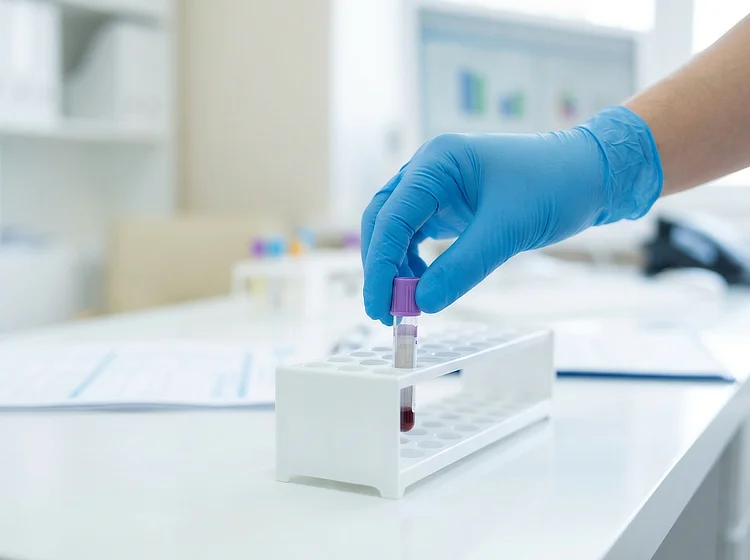
Find out how your metabolic age compares with your actual age from a single blood sample
- One blood sample, reported as your 10-year risk of 5 common diseases, your metabolic age, or both
- Home blood draw available for added privacy and convenience
- Doctor review of your results with personalised advice on what to change

Last updated: Sep 9, 2026
What Is the Nightingale Health Check?
The Nightingale Health Check is a metabolic screening test that uses a single blood sample to
estimate your 10-year risk of 5 common chronic conditions: heart attack, ischaemic
stroke, type 2 diabetes, fatty liver disease and chronic kidney disease. It also summarises your
overall metabolic health as either a Metabolic Age or a Metabolic Resilience Score.
Your risk is expressed in comparison with people of your age, sex and ethnicity. The test does not
diagnose disease, and a raised risk score does not mean you have the condition.
How Is the Nightingale Health Check Different From a Usual Blood Test?
A routine blood test checks whether each result is within the normal range today. The Nightingale Health Check analyses your results together and compares them against large groups of people whose health was tracked for more than 10 years, which allows it to estimate your risk of developing these conditions in future.
| Routine blood test | Nightingale Health Check | |
|---|---|---|
| Number of markers | A small number, each ordered as a separate test | 27 markers from one blood sample |
| Markers included | Cholesterol, glucose, kidney markers and liver enzymes | Cholesterol and kidney markers, plus GlycA, fatty acid ratios and amino acids, which are rarely available as separate tests |
| Analysis | Each result against a normal range | All results together |
| Report | Whether each result was normal at the time of your blood test | Your 10-year risk of 5 conditions, your metabolic age, or both |
In a study of around 300,000 adults, University of Cambridge researchers found that adding the Nightingale Health Check to standard cardiovascular risk screening, which is based on cholesterol, blood pressure, age and smoking, identified more of the people who went on to have a heart attack or stroke.
What Does the Nightingale Health Check Measure?
The Nightingale Health Check measures around 40 values in your blood and reports 27 of them, grouped into 7. Together, these estimate your risk of developing 5 conditions over the next 10 years.
| Group | Markers reported | What it tells you |
|---|---|---|
| Cholesterol | Total cholesterol, LDL, HDL | How fats are carried in the blood. Higher levels are associated with a higher risk of heart attack and stroke. |
| Triglycerides | Total triglycerides | The main type of fat stored in the body, influenced by diet, alcohol and insulin function. Higher levels are associated with fatty liver disease and type 2 diabetes. |
| Apolipoproteins | Apolipoprotein B, apolipoprotein A1, ApoB/ApoA1 ratio | Proteins attached to cholesterol particles, used to estimate how many of these particles are in your blood. A higher particle count is associated with a higher risk of heart attack and stroke. |
| Fluid balance | Creatinine | How well your kidneys are clearing waste from the blood. Higher levels can indicate that the kidneys are filtering less effectively, which is the central feature of chronic kidney disease. |
| Fatty acids | Total fatty acids, SFA, MUFA, PUFA, omega-3, omega-6, and the ratios between them | The balance of different fat types, including omega-3 and saturated fats. An unfavourable balance is associated with cardiovascular disease and type 2 diabetes. |
| Amino acids | Alanine, tyrosine, total BCAAs, valine, isoleucine | What your body breaks protein down into, and uses to build muscle, enzymes and hormones. Higher levels of certain amino acids are associated with insulin resistance, an early step towards type 2 diabetes. |
| Inflammation | Glycoprotein acetyls (GlycA) | Persistent low-level inflammation throughout the body, associated with all 5 of the conditions the test estimates risk for. GlycA reflects long-term inflammation rather than a short-term response to infection. |
How Does the Nightingale Health Check Work?
The Nightingale Health Check analyses a single blood sample using nuclear magnetic resonance (NMR) spectroscopy, the same technology behind an MRI scanner, which reads dozens of molecules from one sample at once instead of running a separate test for each one. Measuring the molecules your metabolism produces this way is called metabolomics.
WhatsApp Us
Who Should Consider a Metabolic Screening Test?
The Nightingale Health Check is intended for adults aged 30 to 65. It tends to be most useful for:
- People with lifestyle or family risk factors – Those with a family history of cardiometabolic disease, or with habits they suspect are harming their health, who want to understand their risk before symptoms appear.
- People who feel well and have normal routine results – Chronic conditions can develop quietly over many years, and reading results one at a time may not reveal a pattern that a combined analysis picks up.
- People making changes and wanting to measure them – Anyone who has adjusted their diet, training or alcohol intake and wants an objective measure of whether those changes are showing up in their blood results.
- People focused on healthspan – Those interested in longevity who want a metabolic baseline they can track over time.
The test is not designed to diagnose an existing condition. If you have symptoms, or are already being treated for diabetes, heart disease or kidney disease, speak with your doctor about which tests are appropriate, as a risk-screening test may not be a suitable starting point.
How Long Does the Nightingale Health Check Take?
- Blood sample – One blood sample is taken at the clinic, or at home if you choose a mobile blood draw. The appointment takes about 30 to 60 minutes.
- Analysis – The laboratory takes around 40 measurements from your blood and combines them into your risk estimates.
- Report and review – You receive a report of your results within 1 to 3 working days, and your doctor will explain what they mean for you.
- Retest – The test can be repeated after 3 to 12 months to see whether your results have changed.

How to Prepare for the Nightingale Health Check
- Do not eat for 4 hours before your blood sample is taken.
- You may drink water normally during that period.
- Continue your usual medications unless your doctor advises otherwise.
- If you intend to retest later, taking the sample at a similar time of day makes the two results easier to compare.
What Do Your Nightingale Health Check Results Mean?
Depending on the package you choose, your Nightingale Health Check report shows your 10-year risk for the 5 conditions, your Metabolic Age or Metabolic Resilience Score with the blood values behind it, or both.
| Result | What it shows |
|---|---|
| Ten-year risk for 5 conditions |
Your risk of heart attack, stroke, type 2 diabetes, fatty liver disease and chronic kidney
disease over the next 10 years, compared with other people your age and sex. Each result is
colour-coded:
|
| Metabolic Age | How old your metabolism appears compared with other people your age and sex, given in years |
| Metabolic Resilience Score | How your results compare with other people your age and sex, given as a score rather than in years. A higher score is the more favourable result. |
"The changes that lead to heart disease, stroke and type 2 diabetes are visible in the
blood long before symptoms appear, and they respond to everyday habits. The Nightingale
Health Check gives patients a starting point to track."
— Dr Leonard Leng
"The changes that lead to heart disease, stroke and type 2 diabetes are visible in the blood long before symptoms appear, and they respond to everyday habits. The Nightingale Health Check gives patients a starting point to track."
— Dr Leonard Leng
Cost of the Nightingale Health Check
At ATA Medical, we offer the Nightingale Health Check with consultation and results review, alongside our longevity and lifestyle medicine services. Prices are as follows:
| Test | Price*^ |
|---|---|
| Consultation | From $49.05 |
| Nightingale Health Check Tests | |
|
5 Risk Scores
Heart attack, stroke, type 2 diabetes, chronic kidney disease and fatty liver disease.
No individual blood values, such as cholesterol, ApoB or GlycA, are reported with this package. |
$91.56 |
|
Metabolic Age + Associated Blood Values
Metabolic Age, with total cholesterol, LDL, HDL, triglycerides, ApoA1, ApoB, creatinine,
fatty acids, amino acids and glycoprotein acetyls.
|
$279.04 |
|
Metabolic Resilience Score + Associated Blood Values
Metabolic Resilience Score, with total cholesterol, LDL, HDL, triglycerides, ApoA1,
ApoB, creatinine, fatty acids, amino acids and glycoprotein acetyls.
|
$279.04 |
|
Nightingale Health Check (5 Risk Scores + Metabolic Age)
All 5 risk scores, plus Metabolic Age and its associated blood values.
|
$300.84 |
|
Nightingale Health Check (5 Risk Scores + Metabolic Resilience Score)
All 5 risk scores, plus the Metabolic Resilience Score and its associated blood values.
|
$300.84 |
| Related Blood Tests (Not Part of the Nightingale Panel) | |
| Essential Lipid Profile: Full Cholesterol Test (Total, LDL, HDL, Triglycerides, HDL Ratio) | $21.80 |
| Apolipoprotein B | $32.70 |
| HsCRP | $38.15 |
| Cardiac Screening 3: Essential Lipid Profile + Apolipoprotein B (ApoB) + HsCRP | $63.22 |
| Fasting Blood Glucose (FBG) Test | $10.90 |
| HbA1c Test | $27.25 |
| Liver Function Test | From $30.52 |
| Kidney Function Test | From $28.34 |
| [Optional] Premium Mobile Blood Drawing at Your Home | Additional $54.50 (per location up to 5 pax) |
^Prices last updated on Sep 9, 2026. While every effort is made to keep pricing information up to date, please contact our team to confirm the latest rates.
Related blood tests are measured by standard laboratory methods rather than the NMR analysis used for the Nightingale Health Check, and do not form part of the Nightingale scores.
Why Choose Us
Personalised Recommendations
Your doctor works out what to do about your result, based on your health history and what you can realistically keep up.
Longevity Care in One Place
Available alongside health screening, hormone testing and body composition analysis.
Same-Day Appointments
At our Tanjong Pagar, Orchard, Jurong and Novena clinics, all within walking distance of an MRT station.
Book an Appointment for the Nightingale Health Check
ATA Medical @ Tanjong Pagar
Sat: 8:30 AM – 12:30 PM
Sun & PH: Closed
Last appt: 5:15 PM (Mon–Fri), 12:15 PM (Sat)
ATA Medical @ Orchard
Sat: 8:30 AM – 12:30 PM
Sun & PH: Closed
Last appt: 5:15 PM (Mon–Fri), 12:15 PM (Sat)
ATA Medical @ Jurong
Sat: 8:30 AM – 12:30 PM
Sun & PH: Closed
Last appt: 5:15 PM (Mon–Fri), 12:15 PM (Sat)
ATA Medical @ Novena
Sat: 8:30 AM – 12:30 PM
Sun & PH: Closed
Last appt: 5:15 PM (Mon–Fri), 12:15 PM (Sat)