

LifeReady™: DNA Health Test for Fitness, Skin and Longevity
Find out how your genes may affect your fitness, skin, allergies and ageing for $498
- Reports on 77 genetic traits across fitness, skin health, allergies and longevity
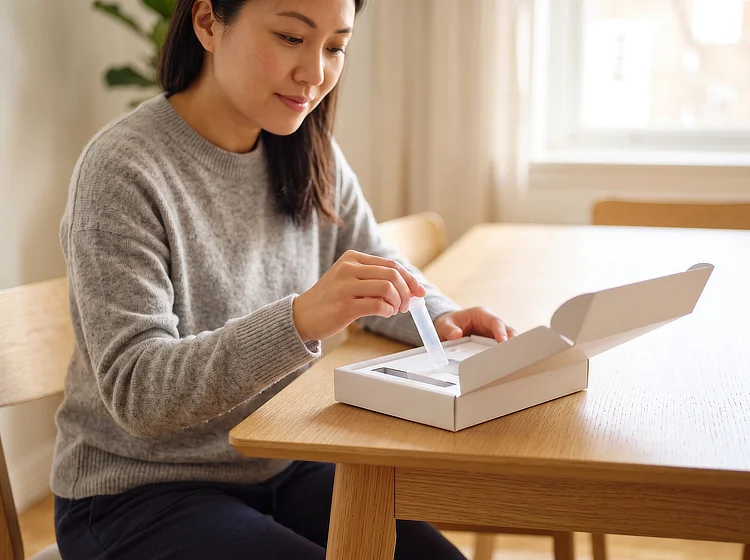
- A simple cheek swab you collect at home, with no needles or blood draw
- Your report usually ready in 2 to 4 weeks
- Doctor review of your results with personalised advice on what to change

Last updated: Oct 15, 2026
What Is the LifeReady DNA Test?
The LifeReady DNA test is a DNA health test that shows how your genes may affect your fitness, skin, allergies and long-term health, from a single cheek swab. It was developed by NalaGenetics, a genetic testing company based in Singapore, and reports on 77 traits grouped into four panels, with 12 more available on a doctor's request.
Each trait is linked to small differences in your genes, called genetic variants, which can make you more or less likely to have that trait. The laboratory reads these variants in your DNA and interprets them using genetic data from local populations. Your report then explains what your result means for each trait, with recommendations on exercise, skincare and daily habits.
LifeReady is a wellness test, not a diagnostic test. Its results show tendencies rather than certainties, so they should not be used to diagnose a condition.
What Does the LifeReady DNA Test Measure?
The LifeReady DNA test reports on 77 traits, such as muscle recovery, skin ageing and sleep quality, which are grouped into four panels: fitness, skin health, allergies and longevity.

Fitness and Exercise
The fitness panel shows how your genes may affect your performance, muscles, injury risk and weight:
- Athletic performance – Your natural endurance, power and strength, lean body mass, and VO2 max (the most oxygen your body can use during exercise).
- Muscle recovery – How easily your muscles gain size, how prone they are to damage and soreness, and how quickly they recover after training.
- Injury risk – Your tendency to injure tendons, ligaments, joints and cartilage, and to develop stress fractures (small cracks from repeated impact) or fragility fractures (breaks from a minor fall).
- Weight management – Your metabolic rate (the calories your body burns at rest), your motivation to exercise, and how easily you may gain or lose weight.

Skin Health and Ageing
The skin health panel reports on genetic traits linked to the condition of your skin and how it ages:
- General skin traits – Dry skin, freckles, cellulite, stretch marks and excessive sweating.
- Skin sensitivity – How well your skin barrier retains moisture and blocks irritants, and how sensitive your skin is to the sun.
- Skin ageing – Wrinkles such as crow's feet, sagging facial skin, sunspots, ultraviolet (UV) damage and how quickly the collagen that keeps skin firm breaks down.

Allergies and Sensitivities
The allergy panel shows whether your genes may make you more prone to certain allergies and sensitivities:
- General allergy tendency – Your overall tendency to allergic reactions, allergy to pets, and histamine intolerance (difficulty breaking down histamine, a chemical found in some foods).
- Airway and skin – Eczema, allergy to dust mites, airways that narrow easily, and sensitivity to air pollution and nickel.
- Food – Allergy to eggs, milk and nuts, and general food sensitivity.
- Chemicals – Sensitivity to benzene and polychlorinated biphenyls (PCBs), industrial chemicals that can remain in the environment, and how the body processes mercury.
- Plants and mould – Allergy to grass, birch pollen, mugwort and mould, and hay fever.
The panel does not show whether you currently have an allergy. An allergy blood test or skin prick test can check that.

Longevity, Sleep and Mental Well-Being
The longevity panel reports on traits linked to your sleep, mood and health as you age:
- Sleep – Insomnia triggered by caffeine, a body clock that runs late, excessive daytime sleepiness and poor sleep quality.
- Memory and thinking – How your memory and thinking may change as you age.
- Inflammation – Your genetic tendency towards inflammation in the body.
- General ageing – Bone density loss, hair loss, droopy eyelids, insulin resistance (when your body responds less well to insulin, so blood sugar rises) and how your HDL ("good") cholesterol responds to exercise.
- Mental well-being – Mood changes with the seasons, and how exercise affects your mental health.
A further 12 traits in this panel, such as glaucoma, cataracts and hearing loss, are reported only when your doctor requests them.
Who Should Consider the LifeReady DNA Test?
The LifeReady DNA test is suitable for adults and for children over 2 years old who are no longer breastfeeding. It may suit:
To plan training, recovery and injury prevention around how their bodies are likely to respond. Fitness trainers may also use the results to tailor their advice.
To choose skincare and sun protection based on how their skin is likely to age and react.
To understand which allergies and sensitivities they may be prone to, and manage their daily triggers.
To understand their children's tendencies and plan family health habits early.
To learn how their genes may affect their sleep, mood and ageing, and adjust their daily habits.
WhatsApp Us
How Is the LifeReady DNA Test Done?
The LifeReady DNA test needs only a cheek swab, which you collect yourself at home.
At ATA Medical, you can pick up the test kit from any of our clinics, with no consultation needed. Follow the instructions in the kit to collect your sample, then return it to us, and we will send it to the laboratory for testing.
Your report is usually ready in 2 to 4 weeks. One of our doctors will then call you to explain your results and what they mean for you.
What Does Your LifeReady Report Show?
Your LifeReady report shows, for each trait, whether your genes give you a lower, normal or higher tendency, with personalised recommendations for each result.
| Type of trait | Possible results | What it means |
|---|---|---|
| Performance traits, such as endurance or muscle gain | Lower, Normal or Higher potential | How your genes may affect your natural ability in this area |
| Risk traits, such as tendon injury or sun sensitivity | Normal or Higher risk | Whether your genes may make this trait more likely than usual |
The report runs to about 40 pages and opens with a summary of your results by panel. Each trait then has its own page, explaining what the trait is, what your result means and what you can do about it, such as the type of exercise that may suit you. You can also view the report on your phone through the NalaGenetics app.
A higher result does not mean you have, or will develop, that trait. Your genes are one influence among many, and your diet, exercise, sleep and surroundings often play a large part as well.
"Two people can follow the same exercise, skincare or sleep routine and get very different results, partly because of their genes. Knowing your genetic tendencies can help you focus on the changes most likely to work for you."
— Dr Leonard Leng
"Two people can follow the same exercise, skincare or sleep routine and get very different results, partly because of their genes. Knowing your genetic tendencies can help you focus on the changes most likely to work for you."
— Dr Leonard Leng
LifeReady DNA Test Price
At ATA Medical, we offer the DNA health test (LifeReady) and other longevity and wellness tests, with prices as follows:
| Test | Price*^ |
|---|---|
| Consultation | From $49.05 |
| LifeReady DNA Health Test | $498 |
| Other DNA Tests | |
| NutriReady DNA Test | $401.83 |
| Wellness Tests | |
| Lucence AgeQ Biological Age Test | $158.05 |
| InBody Composition Test | $43.60 |
| DEXA Body Composition with Visceral Adipose Tissue (VAT) | $308.47 |
| Allergy Test (Skin Prick or Blood) | From $54.50 |
| Men & Women Wellness (Full Body Screening) | From $152 |
^Prices last updated on Oct 15, 2026. While every effort is made to keep pricing information up to date, please contact our team to confirm the latest rates.
Book an Appointment for the LifeReady DNA Test
ATA Medical @ Tanjong Pagar
Sat: 8:30 AM – 12:30 PM
Sun & PH: Closed
Last appt: 5:15 PM (Mon–Fri), 12:15 PM (Sat)
ATA Medical @ Orchard
Sat: 8:30 AM – 12:30 PM
Sun & PH: Closed
Last appt: 5:15 PM (Mon–Fri), 12:15 PM (Sat)
ATA Medical @ Jurong
Sat: 8:30 AM – 12:30 PM
Sun & PH: Closed
Last appt: 5:15 PM (Mon–Fri), 12:15 PM (Sat)
ATA Medical @ Novena
Sat: 8:30 AM – 12:30 PM
Sun & PH: Closed
Last appt: 5:15 PM (Mon–Fri), 12:15 PM (Sat)