

PCSK9 Inhibitors Singapore: Uses, Side Effects & Cost (2026)

PCSK9 Inhibitors

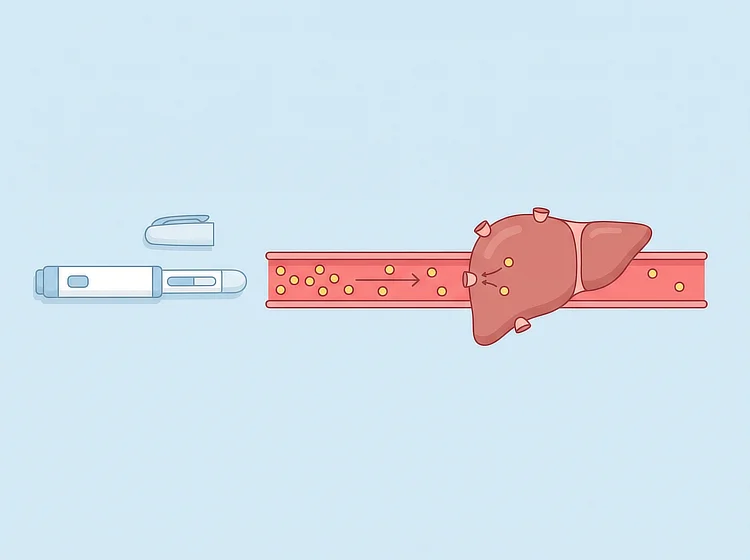
Injection pen with its cap off beside a liver taking cholesterol from the blood.
Transparent Pricing
Same-Day Appointment
MOH-Registered
Near MRT Stations

Lower LDL cholesterol that a statin has not brought to target, with PCSK9 inhibitor injections from $123

  • Doctor consultation to check your cholesterol and whether a PCSK9 inhibitor suits you
  • Injections once or twice a month, or just twice a year, depending on the medicine
  • Your medicine ordered in for you, usually ready within 2 to 3 working days
  • Cholesterol and Lp(a) tests to check your progress after you start

Located in Tanjong Pagar, Orchard, Jurong & Novena
Medically Reviewed By: Dr Leonard Leng – MBBS, MMed (FM), GDOM, DWD
Last updated: Sep 24, 2026

What Are PCSK9 Inhibitors?

PCSK9 inhibitors are prescription medicines that lower low-density lipoprotein (LDL) cholesterol, the "bad" cholesterol that builds up in your arteries. They are mainly used when a statin has not lowered LDL cholesterol enough, and most are given as an injection under the skin.

PCSK9, short for proprotein convertase subtilisin/kexin type 9, is a protein made in your liver that affects how much LDL cholesterol your body removes from your blood. People born with a less active form of PCSK9 have lower cholesterol and typically fewer heart problems throughout life, which led to the development of medicines that block it.

How Do PCSK9 Inhibitors Work?

PCSK9 inhibitors block the PCSK9 protein, so your liver can remove more LDL cholesterol from your blood.

Your liver cells have LDL receptors on their surface, which catch LDL cholesterol from your blood and take it into the liver to be broken down. PCSK9 destroys these receptors, so less LDL cholesterol is removed. Blocking PCSK9 leaves more receptors in place, and your LDL cholesterol falls.

PCSK9 inhibitors taken with a statin can lower LDL cholesterol by a further 50 to 60 per cent. They also partly lower lipoprotein (a), a genetically inherited cholesterol-carrying particle linked to heart disease.

PCSK9 Inhibitor Drugs and How They Are Administered

Four PCSK9 inhibitors are typically used for lowering LDL cholesterol, and they differ mainly in how they are taken and how often:

Drug What it is How it is administered How often
Evolocumab An antibody medicine that blocks PCSK9 Injection under the skin with a prefilled pen Once or twice a month
Alirocumab An antibody medicine that blocks PCSK9 Injection under the skin with a prefilled pen Once or twice a month
Inclisiran A medicine that stops your liver from making PCSK9 Injection under the skin, given at a clinic Twice a year, after two starting doses
Enlicitide A tablet that blocks PCSK9 Tablet taken by mouth Daily

Who Are PCSK9 Inhibitors For?

Statins are usually the first-line treatment for high LDL cholesterol, and ezetimibe, a tablet that reduces how much cholesterol your gut absorbs, is usually prescribed alongside the statin if levels stay high.

PCSK9 inhibitors may be considered when both together are not enough, or for people who cannot take a statin. For people at very high risk, international guidelines recommend keeping LDL cholesterol below 1.4 mmol/L.

They are most often considered for people with:

  • Heart disease or a previous stroke – People who have had a heart attack, stroke or narrowed arteries need a very low LDL cholesterol level, as LDL cholesterol builds the fatty deposits that caused the first event. A statin alone often cannot lower it enough.
  • Genetically inherited high cholesterol (familial hypercholesterolaemia) – A faulty gene passed down in families means the liver removes less LDL cholesterol, so levels are high from birth. It affects roughly 1 in 300 people, and most do not know they have it.
  • Statin side effects – People who cannot take a statin, or only a low dose, because of side effects such as muscle pain need another way to lower their LDL cholesterol.
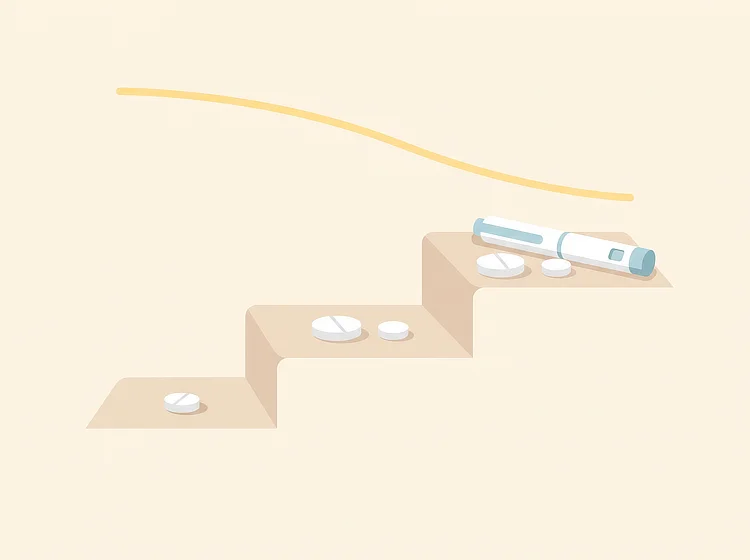
One tablet, then two, then tablets and an injection pen on three rising steps.
Unsure whether a PCSK9 inhibitor is suitable for you? Book an appointment with our doctors to review your cholesterol, health and family history and talk through your options.
WhatsApp Us

PCSK9 Inhibitors vs Statins

PCSK9 inhibitors are usually prescribed alongside statins rather than in place of them, as statins remain the first-line treatment and are widely used for preventing heart attacks and strokes.

PCSK9 inhibitors Statins
How they work Help your liver remove more LDL cholesterol from your blood Make your liver produce less cholesterol
How much they lower LDL cholesterol By a further 50 to 60 per cent when taken with a statin Substantially, and more at higher doses
How they are administered Mostly injections, from twice a month to twice a year Tablet, daily
Effect on heart attacks and strokes Evolocumab and alirocumab reduced them further when taken with a statin Shown to reduce them in many large studies
Common side effects Redness or pain where the injection is given Muscle aches
Effect on lipoprotein (a) Lower it partly May raise it slightly
Cost Higher Low

Potential Side Effects of PCSK9 Inhibitors

PCSK9 inhibitors are generally well tolerated, and the most common side effect is redness or pain where the injection is given.

Potential side effects include:

  • Injection site reactions – Redness, pain, swelling or bruising can appear where the needle went in. These are usually mild and clear within a few days.
  • Cold-like symptoms – A runny nose or sore throat was reported slightly more often than in people given a dummy injection.
  • Back or muscle pain – This has been reported, although muscle pain is less common than with statins.
  • Allergic reactions – A rash or itching is rare. Seek medical help straight away if your face swells or you have difficulty breathing.

Studies that followed people for several years found no rise in diabetes, memory problems or other serious side effects. PCSK9 inhibitors are generally not used during pregnancy or breastfeeding, as their safety in pregnancy is still being reviewed.

PCSK9 Inhibitor Treatment Process

Doctor in navy scrubs reviewing blood test results with a patient across a desk.

At ATA Medical, PCSK9 inhibitor treatment starts with a consultation, followed by a return visit for the injection once your medicine arrives.

Our doctors review your cholesterol results and discuss whether a PCSK9 inhibitor suits you. If you have not had a recent cholesterol test, blood is taken at this visit and your results are ready in 3 to 5 days.

If a PCSK9 inhibitor is assessed to be suitable and you decide to go ahead, prepayment is required before the medicine is ordered, and it is usually delivered to the clinic within 2 to 3 working days. You then return to the clinic for the injection.

"For people whose LDL cholesterol stays high on a statin, PCSK9 inhibitors offer another way to lower it. Every reduction in LDL cholesterol lowers your risk of a future heart attack or stroke."
Dr Leonard Leng

"For people whose LDL cholesterol stays high on a statin, PCSK9 inhibitors offer another way to lower it. Every reduction in LDL cholesterol lowers your risk of a future heart attack or stroke."

Dr Leonard Leng

Cost of PCSK9 Inhibitors in Singapore

At ATA Medical, we offer PCSK9 inhibitor injections that are administered fortnightly to monthly or every 6 months depending on the medicine, with consultation and results review.

Our prices are as follows:

Treatment / Test Price*
Consultation From $49.05
Evolocumab (140 mg): Once or twice a month $123.00 per injection
Inclisiran: Typically every 6 months $3,828.00 per injection
Cholesterol Tests
Lipoprotein (a) $49.99
Essential Lipid Profile
Full Cholesterol Test (Total, LDL, HDL, Triglycerides, HDL Ratio)
$21.80
Cardiac Screening 3
Essential Lipid Profile + Apolipoprotein B (ApoB) + HsCRP
$63.22
*Prices are NETT and inclusive of GST.
^Prices last updated on Sep 24, 2026. While every effort is made to keep pricing information up to date, please contact our team to confirm the latest rates.

How Do I Book a PCSK9 Inhibitor Consultation?

ATA Medical @ Tanjong Pagar

72 Anson Rd, #01-02 Anson House, Singapore 079911
Tanjong Pagar Station (EW15)
Mon–Fri: 8:30 AM – 12:30 PM, 1:30 PM – 5:30 PM
Sat: 8:30 AM – 12:30 PM
Sun & PH: Closed
Last appt: 5:15 PM (Mon–Fri), 12:15 PM (Sat)

ATA Medical @ Orchard

1 Orchard Blvd, #05-09 Camden Medical Centre, Singapore 248649
Orchard Boulevard Station (TE13)
Mon–Fri: 8:30 AM – 12:30 PM, 1:30 PM – 5:30 PM
Sat: 8:30 AM – 12:30 PM
Sun & PH: Closed
Last appt: 5:15 PM (Mon–Fri), 12:15 PM (Sat)

ATA Medical @ Jurong

21 Jurong Gateway Rd, #02-08 CPF Jurong Building, Singapore 608546
Jurong East Station (NS1/EW24)
Mon–Fri: 8:30 AM – 12:30 PM, 1:30 PM – 5:30 PM
Sat: 8:30 AM – 12:30 PM
Sun & PH: Closed
Last appt: 5:15 PM (Mon–Fri), 12:15 PM (Sat)

ATA Medical @ Novena

101 Irrawaddy Rd, #09-01 Royal Square Medical Centre, Singapore 329565
Novena Station (NS20)
Mon–Fri: 8:30 AM – 12:30 PM, 1:30 PM – 5:30 PM
Sat: 8:30 AM – 12:30 PM
Sun & PH: Closed
Last appt: 5:15 PM (Mon–Fri), 12:15 PM (Sat)

Navigate to Us

ATA Medical (Anson House)

Nearest MRT: EW15 Tanjong Pagar

ATA Medical (Camden Medical Centre)

Nearest MRT: TE13 Orchard Boulevard

ATA Medical (CPF Jurong Building)

Nearest MRT: NS1/EW24 Jurong East

ATA Medical (Royal Square Medical Centre)

Nearest MRT: NS20 Novena

Frequently Asked Questions (FAQ)

Yes, PCSK9 inhibitors lower lipoprotein (a), or Lp(a), modestly, although they are prescribed mainly to lower low-density lipoprotein (LDL) cholesterol. Lp(a) is a cholesterol-carrying particle whose level is determined mainly by genes, and a high level is linked to heart attacks and strokes. Lowering LDL cholesterol is known to reduce heart attacks and strokes, but whether lowering Lp(a) itself prevents them is still being tested, so PCSK9 inhibitors are not usually prescribed for a high Lp(a) level alone.
Two of the four PCSK9 inhibitors, evolocumab and alirocumab, are monoclonal antibodies, laboratory-made proteins that attach to one specific target in the body. They bind to the PCSK9 protein in the blood, so it can no longer destroy the receptors the liver uses to remove low-density lipoprotein (LDL) cholesterol. Inclisiran works differently: it is a small interfering RNA (siRNA) medicine that stops the liver from making PCSK9. Enlicitide is a tablet that blocks the protein directly.
Diabetes is not a known side effect of PCSK9 inhibitors. Over several years of use, new cases of diabetes have not been more common in people taking them than in people given a dummy injection (placebo). This differs from statins, which can raise blood sugar slightly in some people, particularly those already at higher risk of developing diabetes.
Muscle pain can occur with PCSK9 inhibitors, but it is reported less often than with statins and is not usually severe. Back pain and general muscle aches are among the listed side effects, alongside redness or pain where the injection is given. Many people who stopped a statin because of muscle pain are able to take a PCSK9 inhibitor, so these medicines are often used for statin intolerance, when side effects prevent a person from taking a high enough statin dose.
PCSK9 inhibitors can slightly reduce atherosclerosis, the build-up of fatty deposits called plaque inside the artery walls, but they do not remove it completely. By lowering low-density lipoprotein (LDL) cholesterol to very low levels, they may shrink the volume of plaque a little and are thought to make the remaining plaque more stable, with a thicker covering that is less likely to rupture and trigger a heart attack or stroke. Most of their benefit comes from slowing further build-up.
PCSK9 inhibitors lower triglycerides, a type of fat carried in the blood, only slightly, as their main effect is on low-density lipoprotein (LDL) cholesterol. They are not used to treat high triglycerides. When triglycerides stay high, the usual first steps are cutting down on alcohol, sugar and refined carbohydrates, losing excess weight and controlling blood sugar, and medicines such as fibrates or high-dose omega-3 fatty acids may be considered.
No natural PCSK9 inhibitor matches the effect of a prescription one. Some plant compounds, such as berberine from herbs like goldenseal and barberry, are thought to reduce the amount of PCSK9 the liver makes, but their effect on low-density lipoprotein (LDL) cholesterol is much smaller and less consistent. Supplements are also not tested or regulated in the same way as medicines, so their strength and purity can vary, and some interact with prescription medicines.
The first PCSK9 inhibitors, alirocumab and evolocumab, were approved in 2015 in the United States and Europe, about a decade after the PCSK9 protein was first linked to cholesterol. Inclisiran, an injection given twice a year after two starting doses, was approved in Europe in 2020 and in the United States in 2021. Enlicitide, the first PCSK9 inhibitor taken as a tablet, was approved in the United States in 2026.
No PCSK9 vaccine is approved for use. Vaccines designed to train the immune system to make its own antibodies against PCSK9 are being tested in early clinical trials, with the aim of lowering low-density lipoprotein (LDL) cholesterol for longer with fewer doses. Until one is shown to work and is approved, the options remain PCSK9 inhibitor injections, given once or twice a month or twice a year, and a daily tablet approved in the United States.
Four drugs are PCSK9 inhibitors: evolocumab, alirocumab, inclisiran and enlicitide. Evolocumab and alirocumab are antibody injections given under the skin once or twice a month, inclisiran is an injection given at a clinic twice a year after two starting doses, and enlicitide is a daily tablet. All four lower low-density lipoprotein (LDL) cholesterol by helping the liver remove more of it from the blood, and they are usually prescribed alongside a statin.
PCSK9 inhibitors cost more than statins and most other cholesterol medicines, and the total cost depends on which medicine is used and how often it is given. At ATA Medical, we offer PCSK9 inhibitor injections: evolocumab at $123.00 per injection, typically given once or twice a month, and inclisiran at $3,828.00 per injection, typically given every 6 months after two starting doses. A consultation, from $49.05, comes first. All prices are NETT and inclusive of GST.
PCSK9 inhibitors are not considered safer than statins overall, as the two carry different side effects. PCSK9 inhibitors cause muscle aches less often and have not been linked to a rise in diabetes, but their most common side effect is redness or pain where the injection is given. Statins have been widely used for decades and remain the first-line treatment, and PCSK9 inhibitors are usually prescribed alongside them when a statin alone is not enough.
People who have had an allergic reaction to a PCSK9 inhibitor or any of its ingredients should generally not take one. These medicines are usually avoided during pregnancy and breastfeeding, as their safety in pregnancy is still being reviewed. Use in children is limited to inherited conditions such as familial hypercholesterolaemia. You should consult your doctor about whether a PCSK9 inhibitor suits you, based on your medical history, current medicines and any plans for pregnancy.
No PCSK9 inhibitor is best for everyone. Evolocumab and alirocumab, injections given once or twice a month, lower low-density lipoprotein (LDL) cholesterol by similar amounts and are known to reduce heart attacks and strokes when taken with a statin. Inclisiran typically requires only two injections a year once the two starting doses are given, while its effect on heart attacks and strokes is still being tested. It is best to discuss with your doctor whether a PCSK9 inhibitor suits you and, if so, which option, based on your cholesterol levels, dosing preference and cost.
Only a doctor can prescribe PCSK9 inhibitors, as they are prescription-only medicines, and this can be a general practitioner (GP) or a specialist such as a cardiologist or endocrinologist. Your doctor will usually check your low-density lipoprotein (LDL) cholesterol and current medicines first, as PCSK9 inhibitors are generally prescribed when other cholesterol medicines have not lowered it enough or cannot be taken. At ATA Medical, our doctors can assess whether a PCSK9 inhibitor suits you.
PCSK9 inhibitors typically lower low-density lipoprotein (LDL) cholesterol by around a further half or more when taken with a statin, with inclisiran usually lowering it slightly less than evolocumab and alirocumab. The effect usually appears within weeks of starting and lasts only as long as the medicine is continued, so LDL cholesterol rises again once treatment stops. You should consult your doctor before starting, changing or stopping any cholesterol medicine.
No single cholesterol-lowering drug is the safest for everyone, as each carries some risk of side effects and the most suitable choice depends on a person's health and other medicines. Statins are usually the first-line treatment, and their side effects, such as muscle aches, can often be managed with a lower dose or a different statin. When side effects limit the statin dose, a combination is commonly used instead, such as a lower-dose statin with ezetimibe, a tablet that reduces how much cholesterol the gut absorbs, or with a PCSK9 inhibitor.
Yes, the PCSK9 protein itself increases low-density lipoprotein (LDL) cholesterol, which is why medicines that block it lower LDL cholesterol. PCSK9, a protein made mainly in the liver, destroys the receptors the liver uses to remove LDL cholesterol from the blood, so more PCSK9 leaves more LDL cholesterol circulating. People born with an overactive form of the PCSK9 gene have very high LDL cholesterol from birth, one of the inherited causes of familial hypercholesterolaemia.
The worst foods for cholesterol are those high in saturated fat or trans fat, which tend to raise low-density lipoprotein (LDL) cholesterol the most. Six common examples are fatty and processed meats such as sausages and bacon, full-fat dairy such as butter, cream and cheese, deep-fried foods, pastries and biscuits made with butter or shortening, dishes cooked in coconut milk, palm oil or ghee, and fast food. Swapping these for lean protein, whole grains, vegetables and unsaturated oils can help lower LDL cholesterol.